
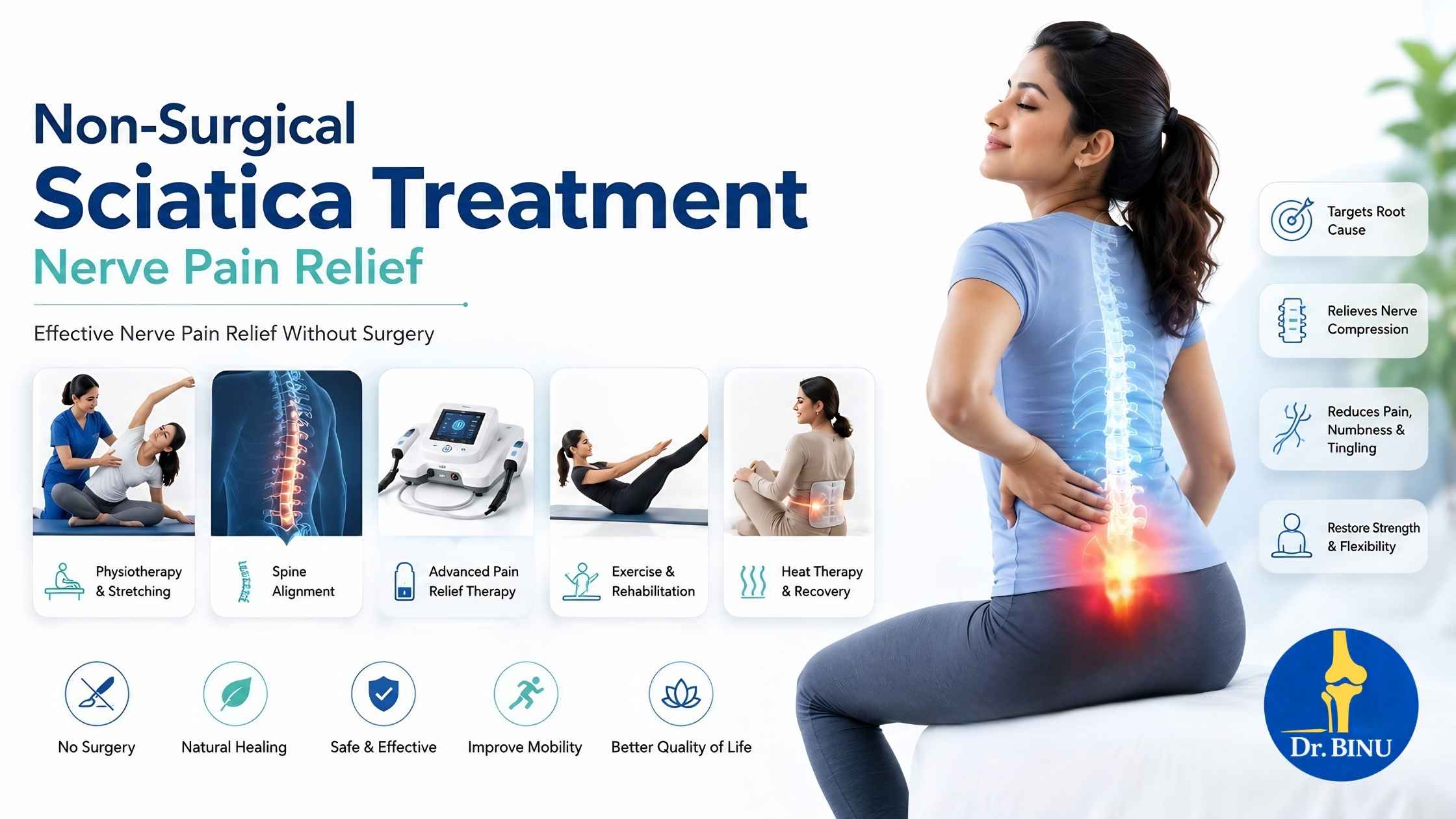
Sciatica is one of the most common causes of radiating lower back and leg discomfort, often affecting mobility, sleep, work performance, and overall quality of life. In many cases, patients can recover successfully without surgery through advanced conservative care, guided rehabilitation, and precise diagnosis. Dr. Binu Sasidharan Neelakantan, Specialist Orthopaedic Surgeon in Abu Dhabi, provides evidence-based and patient-focused approaches for long-term nerve pain relief using modern non-operative orthopaedic techniques.
Patients seeking Sciatica treatment Abu Dhabi often experience symptoms such as burning pain, numbness, tingling, weakness, or radiating discomfort extending from the lower back into the buttocks and legs. Dr. Binu Sasidharan evaluates the underlying cause carefully before designing a personalized treatment plan focused on restoring mobility, reducing inflammation, and preventing recurrence.
What is sciatica and why does it occur?
Sciatica refers to pain caused by irritation or compression of the sciatic nerve, the largest nerve in the body. The condition typically originates in the lower spine and radiates down one leg. The most common cause is a slipped or herniated disc, but other spinal conditions may also contribute.
The condition is frequently associated with lumbar radiculopathy, where spinal nerve roots become compressed or inflamed. This can lead to sharp pain, muscle weakness, altered sensation, and difficulty performing routine activities such as standing, walking, or bending.
Common causes of sciatica
- Herniated or bulging lumbar disc
- Degenerative disc disease
- Spinal stenosis
- Spondylosis and chronic back pain
- Piriformis syndrome
- Sports-related spinal injuries
- Age-related spinal degeneration
- Postural stress and occupational strain
What are the symptoms of sciatica?
Sciatica symptoms can vary from mild discomfort to severe disabling pain. Early diagnosis is important because untreated nerve compression may gradually affect strength, balance, and mobility.
Typical symptoms include
- Radiating pain from the lower back into the leg
- Burning or electric-shock sensations
- Numbness or tingling in the foot or calf
- Muscle weakness
- Difficulty standing for long periods
- Pain worsening during coughing or sneezing
- Reduced flexibility and walking tolerance
Patients often search for immediate nerve pain relief when symptoms begin interfering with work, exercise, or sleep. However, identifying the root cause remains essential for lasting recovery.
How is sciatica diagnosed accurately?
Effective treatment starts with a detailed orthopaedic assessment. Dr. Binu Sasidharan combines clinical examination, neurological evaluation, and imaging studies to identify the exact source of nerve irritation.
Diagnostic methods may include
- Comprehensive medical history review
- Physical and neurological examination
- Muscle strength and reflex assessment
- Spinal mobility evaluation
- X-rays to evaluate spinal alignment
- MRI scans for disc and nerve assessment
- CT scans when necessary
Accurate diagnosis is particularly important in cases involving lumbar radiculopathy, where multiple spinal levels may contribute to symptoms.
Can sciatica be treated without surgery?
Yes. Most patients improve significantly through conservative orthopaedic care without requiring surgery. Non-operative management focuses on reducing inflammation, improving spinal function, relieving nerve compression, and strengthening surrounding muscles.
Dr. Binu Sasidharan emphasizes individualized treatment planning based on symptom severity, patient lifestyle, imaging findings, and recovery goals. His approach combines advanced orthopaedic expertise with evidence-based rehabilitation strategies.
Benefits of non-surgical management
- Avoidance of surgical risks
- Faster recovery timelines
- Reduced downtime from work
- Improved mobility and flexibility
- Lower recurrence risk with rehabilitation
- Personalized treatment progression
What are the best non-surgical treatment options for sciatica?
The best treatment depends on the underlying spinal condition and symptom intensity. A combination of therapies often produces optimal outcomes.
| Treatment option | Purpose |
|---|---|
| Physiotherapy | Improve mobility and strengthen spinal support muscles |
| Activity modification | Reduce strain on irritated nerves |
| Anti-inflammatory medications | Control pain and inflammation |
| Posture correction | Improve spinal alignment |
| Core strengthening | Stabilize the lumbar spine |
| epidural injections | Deliver targeted anti-inflammatory relief around compressed nerves |
| Stretching and rehabilitation | Restore flexibility and movement |
| nerve exercises | Improve nerve mobility and reduce irritation |
How do epidural injections help in sciatica?
epidural injections are minimally invasive procedures used to reduce inflammation around irritated spinal nerves. They are commonly recommended when severe radiating pain limits daily function or when oral medications and therapy alone are insufficient.
These injections deliver anti-inflammatory medication directly near the affected nerve root, helping reduce swelling and improve movement. For many patients, they provide meaningful short-term and medium-term symptom control while rehabilitation continues.
Potential benefits of epidural injections
- Reduced radiating leg pain
- Improved walking tolerance
- Better sleep quality
- Enhanced participation in physiotherapy
- Reduced inflammation around nerve roots
Why are nerve exercises important for recovery?
Targeted nerve exercises play an important role in restoring movement and reducing nerve sensitivity. These exercises are designed to gently mobilize the sciatic nerve while improving flexibility and muscular support around the lumbar spine.
When supervised appropriately, rehabilitation exercises can improve posture, strengthen the core, and reduce the likelihood of symptom recurrence.
Examples of rehabilitation-focused exercises
- Sciatic nerve gliding exercises
- Hamstring stretches
- Pelvic tilts
- Core stabilization routines
- Lumbar mobility exercises
- Hip strengthening movements
What lifestyle changes help prevent recurring sciatica?
Long-term prevention is an essential component of successful treatment. Dr. Binu Sasidharan guides patients on practical strategies that reduce spinal stress and improve musculoskeletal health.
Preventive strategies include
- Maintaining proper posture during work
- Regular stretching and mobility routines
- Weight management
- Strengthening abdominal and back muscles
- Avoiding prolonged sitting
- Using proper lifting techniques
- Staying physically active consistently
When should you consult an orthopaedic specialist for sciatica?
Persistent or worsening symptoms require medical evaluation, especially if pain affects daily function or neurological symptoms develop.
Seek specialist care if you experience
- Severe or progressive leg weakness
- Persistent numbness
- Difficulty walking
- Loss of bladder or bowel control
- Pain lasting longer than several weeks
- Recurring episodes of sciatica
Patients looking for advanced leg pain therapy often benefit from early orthopaedic evaluation before symptoms become chronic.
Why choose Dr. Binu Sasidharan for Sciatica treatment Abu Dhabi?
Dr. Binu Sasidharan Neelakantan is a highly experienced Specialist Orthopaedic Surgeon in Abu Dhabi with over 20 years of orthopaedic expertise. His approach integrates evidence-based medicine, advanced diagnostics, minimally invasive treatment principles, and personalized rehabilitation planning.
He currently practices at NMC Specialty Hospital, Electra, Abu Dhabi, where he manages a broad range of musculoskeletal and spinal conditions using both surgical and non-surgical techniques.
Key reasons patients trust Dr. Binu Sasidharan
- Over two decades of orthopaedic experience
- Expertise in spinal and degenerative musculoskeletal conditions
- Advanced fellowship training in arthroplasty and arthroscopy
- Patient-focused treatment planning
- Strong emphasis on healthcare quality and patient safety
- Multilingual communication for diverse UAE patients
- Comprehensive rehabilitation-centered care
About Dr. Binu Sasidharan
Dr. Binu Sasidharan Neelakantan is a Specialist Orthopaedic Surgeon based in Abu Dhabi, UAE, specializing in orthopaedics, sports medicine, trauma care, arthroscopy, arthroplasty, and non-surgical musculoskeletal treatment. His qualifications include MBBS, Diploma in Orthopaedics, MS Orthopaedics, ISAKOS-approved fellowship training, MBA in Healthcare, MSc from the Royal College of Surgeons Ireland, and multiple certifications in healthcare quality and patient safety.
His patient-care philosophy emphasizes individualized treatment, transparent communication, minimally invasive techniques when appropriate, and long-term mobility restoration. This comprehensive approach helps patients achieve effective nerve pain relief while improving overall spinal health and function.
Conclusion
Sciatica can significantly affect daily life, but many patients recover successfully through advanced conservative treatment and structured rehabilitation. Early diagnosis, targeted therapy, posture correction, strengthening programs, and evidence-based interventions can provide meaningful improvement without surgery.
For patients seeking trusted and personalized Sciatica treatment Abu Dhabi, Dr. Binu Sasidharan offers comprehensive orthopaedic care designed to relieve symptoms, improve mobility, and support long-term spinal health through modern non-surgical approaches.
Frequently Asked Questions
What causes sciatica pain and when should I seek treatment?
Sciatica usually develops when the sciatic nerve becomes irritated or compressed due to conditions such as a herniated disc, spinal narrowing, muscle inflammation, or lumbar radiculopathy. Patients often experience pain that travels from the lower back into the hips, buttocks, or legs. Tingling, numbness, weakness, or burning sensations may also occur.
If the discomfort continues for several weeks, affects walking, interrupts sleep, or causes increasing weakness in the legs, it is important to consult a specialist. Dr. Binu Sasidharan evaluates the root cause of nerve-related pain and designs a customized treatment approach focused on long-term recovery rather than temporary symptom control.
What does Non-Surgical Sciatica Treatment involve?
Non-Surgical Sciatica Treatment focuses on reducing nerve inflammation, improving spinal mobility, relieving pressure on irritated nerves, and restoring normal movement without surgery. Treatment may include targeted physiotherapy, posture correction, pain management techniques, guided rehabilitation, and specialized exercises.
Dr. Binu Sasidharan creates individualized care plans depending on the severity of symptoms, imaging findings, daily activity level, and overall health condition. The goal is to achieve sustainable nerve pain relief while helping patients return to work, exercise, and daily routines comfortably.
How effective is Sciatica treatment Abu Dhabi for chronic nerve pain?
Modern Sciatica treatment Abu Dhabi programs are highly effective when the condition is diagnosed early and treated with a structured rehabilitation plan. Many patients experience significant improvement in pain levels, mobility, and nerve function through conservative care.
Dr. Binu Sasidharan emphasizes evidence-based therapies that address the underlying source of pain rather than masking symptoms. By combining movement correction, spinal care strategies, and progressive rehabilitation, patients can often avoid invasive procedures and maintain long-term spinal health.
Are epidural injections recommended for severe sciatica?
In certain cases where inflammation around the nerve is severe, epidural injections may be recommended as part of a broader pain management strategy. These injections help reduce swelling and irritation around the affected nerve roots, which can improve comfort and mobility.
However, injections are not always the first step. Dr. Binu Sasidharan carefully evaluates each patient before recommending advanced interventions. Many individuals respond well to conservative therapy and rehabilitation without requiring invasive procedures.
Can exercise help relieve sciatic nerve pain?
Yes, guided movement therapy and nerve exercises can play an important role in reducing pressure on the sciatic nerve. Stretching tight muscles, improving posture, and strengthening the lower back and core muscles often help improve stability and reduce recurring flare-ups.
It is important that exercises are performed correctly and under professional supervision, especially during painful episodes. Dr. Binu Sasidharan recommends customized rehabilitation routines based on the patient’s condition, mobility level, and pain intensity.
What are the common symptoms that indicate nerve involvement?
Symptoms involving the sciatic nerve often include radiating pain down one leg, numbness, tingling sensations, muscle weakness, burning discomfort, or difficulty standing for long periods. Some patients may also experience shooting pain while coughing, bending, or sitting.
Since these symptoms can overlap with other spinal or muscular conditions, an accurate diagnosis is essential. Dr. Binu Sasidharan conducts detailed evaluations to identify whether the pain originates from nerve compression, muscular dysfunction, or spinal instability.
Is leg pain therapy necessary for mild sciatica symptoms?
Even mild symptoms should not be ignored because untreated nerve irritation can gradually worsen over time. Early leg pain therapy can improve flexibility, reduce inflammation, and prevent recurring episodes that may later interfere with mobility and quality of life.
Dr. Binu Sasidharan focuses on early intervention strategies that support recovery while minimizing dependence on long-term medication use. Many patients benefit from a combination of movement correction, strengthening exercises, and targeted rehabilitation techniques.
How long does it take to recover from sciatica without surgery?
Recovery time depends on the severity of nerve compression, the duration of symptoms, lifestyle habits, and the patient’s commitment to rehabilitation. Some individuals improve within a few weeks, while chronic cases may require longer treatment and structured follow-up care.
With early diagnosis, consistent therapy, and personalized treatment from Dr. Binu Sasidharan, many patients experience progressive improvement without surgery. The focus is not only on pain reduction but also on restoring mobility, strength, and long-term spinal function.
