
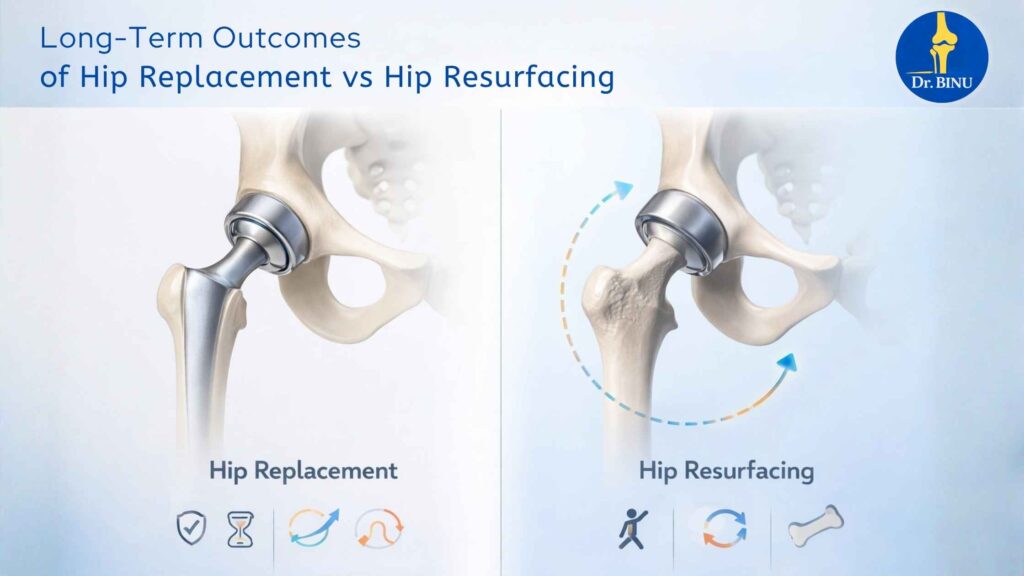
When comparing hip resurfacing vs hip replacement long term results, both procedures aim to relieve pain and restore mobility, but they differ significantly in durability, implant lifespan, and suitability for different patient groups. Understanding these differences is essential for making an informed surgical decision with the guidance of an experienced orthopaedic specialist like Dr. Binu Sasidharan.
What is the difference between hip replacement and hip resurfacing?
Hip replacement involves removing the damaged joint and replacing it with an artificial implant, whereas hip resurfacing preserves more of the natural bone by capping the femoral head with a metal prosthesis. The choice depends on age, activity level, and bone quality.
- Hip replacement: Complete joint replacement with prosthetic components
- Hip resurfacing: Bone-preserving alternative with metal-on-metal surfaces
- Suitability: Resurfacing is often recommended for younger, active patients
How do hip joint surgery results compare in the long term?
The overall hip joint surgery results are highly successful in both procedures, with significant pain relief and improved function. However, long-term performance varies based on implant design, surgical technique, and patient-specific factors.
Dr. Binu Sasidharan emphasizes personalized evaluation to determine which procedure offers the best long-term outcome. His evidence-based approach ensures optimal recovery and sustained joint function.
What is the hip replacement long term outcomes?
Hip replacement long term outcomes are well-documented, with most implants lasting 15–25 years or more. Advances in materials and surgical techniques have significantly improved durability and patient satisfaction.
- High success rates across all age groups
- Reliable pain relief and improved mobility
- Lower risk of revision compared to older techniques
The hip replacement success rate exceeds 90% in most modern studies, making it a gold standard treatment for advanced arthritis and joint damage.
What is hip resurfacing longevity?
Hip resurfacing longevity can be comparable to total hip replacement in carefully selected patients, particularly younger individuals with strong bone density. However, outcomes depend heavily on surgical expertise and implant positioning.
- Best suited for younger, active males
- Preserves bone for future revision surgeries
- Allows higher activity levels post-surgery
The hip resurfacing success rate is high in ideal candidates but may vary in women or patients with weaker bone structure.
Hip resurfacing vs hip replacement durability: Which lasts longer?
When evaluating hip resurfacing vs hip replacement durability, total hip replacement generally offers more predictable long-term results. However, resurfacing can provide excellent durability in select patients.
| Factor | Hip Replacement | Hip Resurfacing |
|---|---|---|
| Durability | 15–25+ years | 10–20 years (varies) |
| Revision Risk | Lower | Higher in certain groups |
| Activity Level | Moderate to high | High |
| Bone Preservation | Less | More |
What is the hip implant lifespan comparison?
The hip implant lifespan comparison highlights that modern hip replacement implants typically last longer than resurfacing implants, especially in older patients.
- Hip replacement implant lifespan: 15–25+ years
- Hip resurfacing: Slightly shorter lifespan in some populations
Factors influencing implant longevity include:
- Patient age and activity level
- Bone quality
- Body weight
- Surgical precision
What affects long-term success of hip surgeries?
Several factors influence long-term outcomes:
- Surgeon expertise and experience
- Implant quality and technology
- Post-operative rehabilitation
- Patient lifestyle and compliance
With over 20 years of experience, Dr. Binu Sasidharan ensures each procedure is tailored to the patient’s needs, optimizing both short-term recovery and long-term joint health.
Which procedure is better for you?
The decision between hip replacement and hip resurfacing depends on:
- Age and activity level
- Bone quality
- Severity of joint damage
- Long-term expectations
Dr. Binu conducts a comprehensive evaluation, including imaging and functional assessment, to recommend the most suitable option for each patient.
Why choose Dr. Binu Sasidharan for hip surgery?
Dr. Binu Sasidharan Neelakantan is a Specialist Orthopaedic Surgeon in Abu Dhabi with extensive expertise in joint replacement and arthroplasty. His approach combines advanced surgical techniques with a strong focus on patient safety and long-term outcomes.
- Over 20 years of orthopaedic experience
- Advanced fellowship training in arthroplasty
- Expertise in complex joint reconstruction
- Patient-centered and evidence-based care
About Dr. Binu Sasidharan
Dr. Binu Sasidharan Neelakantan is a highly experienced orthopaedic surgeon based in Abu Dhabi, UAE, specializing in joint replacement, sports medicine, and trauma care. Practicing at NMC Specialty Hospital, he is known for delivering advanced musculoskeletal care with a focus on safety, precision, and long-term patient outcomes.
Long-Term Outcomes of Hip Replacement vs Hip Resurfacing – FAQs
The hip resurfacing vs hip replacement long term results depend on patient age, activity level, and bone quality. Hip resurfacing often preserves more bone and may suit younger, active individuals, while hip replacement offers predictable pain relief and stability for a wider range of patients. Under the care of Dr. Binu Sasidharan, both procedures are carefully selected to maximize durability and long-term joint function.
Hip resurfacing longevity can extend beyond 15–20 years in well-selected patients. Outcomes are highly dependent on surgical precision and patient compliance with rehabilitation. Dr. Binu Sasidharan focuses on advanced techniques that help improve implant positioning and extend functional lifespan.
The hip replacement implant lifespan generally ranges from 15 to 25 years, with modern materials often lasting even longer. Factors such as implant type, surgical technique, and lifestyle influence longevity. Dr. Binu Sasidharan uses high-quality implants designed to improve long-term durability and performance.
The hip resurfacing success rate is high in properly selected candidates, especially younger patients with strong bone density. However, hip replacement success rate remains consistently high across broader patient groups. Dr. Binu Sasidharan evaluates each case individually to recommend the most suitable procedure.
Hip replacement long term outcomes are generally excellent, offering sustained pain relief, improved mobility, and enhanced quality of life. Advances in implant materials and surgical techniques have further improved longevity and patient satisfaction under expert surgeons like Dr. Binu Sasidharan.
When comparing hip resurfacing vs hip replacement durability, resurfacing may offer advantages in preserving bone and supporting high activity levels, while replacement provides consistent durability across diverse patient profiles. The choice depends on individual health factors and long-term goals.
A hip implant lifespan comparison shows that both procedures offer long-lasting solutions, but hip replacements are generally more predictable across age groups. Hip resurfacing may last equally long in ideal candidates, especially younger patients.
Hip joint surgery results typically include significant pain reduction, improved mobility, and return to daily activities. With Dr. Binu Sasidharan’s expertise, patients benefit from personalized treatment plans that enhance recovery and long-term outcomes.
The hip replacement success rate is among the highest in orthopedic procedures, often exceeding 90–95%. Success is defined by pain relief, improved joint function, and implant longevity, all of which are optimized through expert surgical care.
