
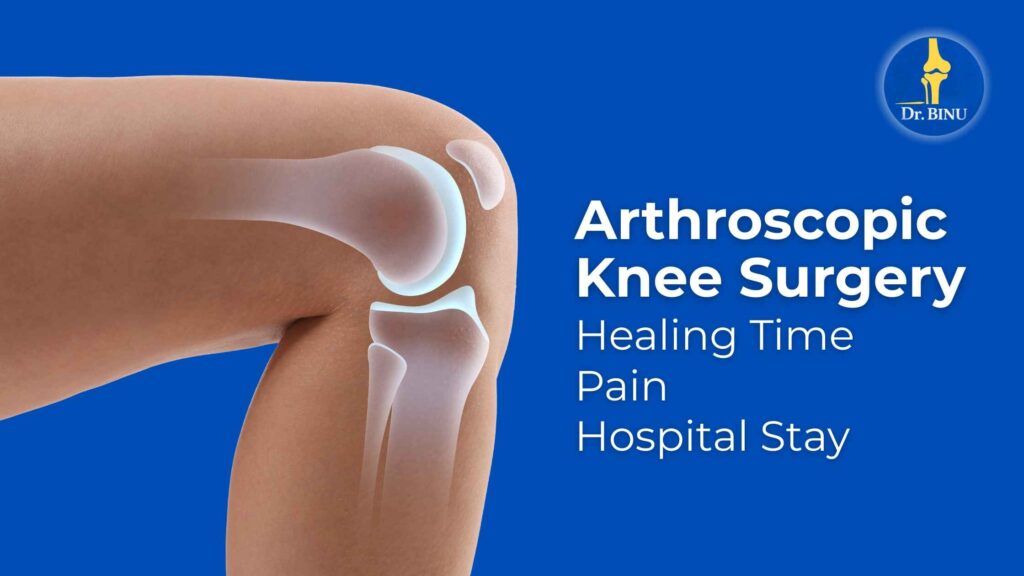
Arthroscopic knee surgery healing time, pain & hospital stay
Arthroscopic knee surgery healing time varies depending on the condition treated, the patient’s age, and rehabilitation adherence. In most cases, recovery begins within a few days, with patients returning to daily activities within 4–6 weeks. Modern minimally invasive techniques performed by experienced orthopaedic surgeons such as Dr. Binu Sasidharan Neelakantan help reduce pain, shorten recovery time, and minimize complications.
Dr. Binu Sasidharan is a Specialist Orthopaedic Surgeon practicing at NMC Specialty Hospital, Electra, Abu Dhabi, with more than two decades of experience in orthopaedics, joint replacement, sports injuries, and minimally invasive knee procedures. His advanced training in arthroscopy and arthroplasty enables him to deliver effective treatment with faster rehabilitation and improved long-term mobility for patients.
What is arthroscopic knee surgery?
Arthroscopic knee surgery is a minimally invasive procedure used to diagnose and treat problems inside the knee joint. The surgeon inserts a small camera called an arthroscope through tiny incisions, allowing precise visualization and treatment without the need for large surgical cuts.
This procedure is commonly recommended for:
- Meniscus tears
- Ligament injuries
- Cartilage damage
- Inflammation or synovitis
- Loose bone or cartilage fragments
- Early osteoarthritis management
Because of its minimally invasive nature, the success of arthroscopic knee surgery is generally high, with most patients experiencing improved joint stability, reduced pain, and better mobility.
How long does arthroscopic knee surgery take?
The arthroscopic knee surgery time usually ranges between 30 minutes and 90 minutes depending on the complexity of the condition being treated. Procedures like simple meniscus trimming may take less than an hour, while ligament repair or cartilage restoration may take slightly longer.
Dr. Binu Sasidharan carefully evaluates each patient before surgery, ensuring the procedure is tailored to the specific injury. His extensive experience in knee arthroscopy helps streamline surgical efficiency and reduce operative time while maintaining precision.
Factors affecting arthroscopic knee surgery time
- Type of knee injury or damage
- Whether ligament reconstruction is required
- Patient’s overall joint condition
- Presence of multiple knee problems
- Complexity of cartilage repair
Is arthroscopic knee surgery outpatient?
In most cases, arthroscopic knee surgery outpatient procedures are performed as day-care surgeries. This means patients can return home on the same day once the effects of anesthesia wear off and the surgeon confirms stable recovery.
Minimally invasive arthroscopy allows surgeons to perform complex joint repairs with small incisions, reducing blood loss and trauma to surrounding tissues. Under the expert care of Dr. Binu Sasidharan, many patients are discharged within hours after surgery.
Advantages of outpatient knee arthroscopy
- Reduced hospital stay
- Lower infection risk
- Faster return to home comfort
- Reduced healthcare costs
- Early mobility and rehabilitation
How long is arthroscopic knee surgery hospital stay?
The typical arthroscopic knee surgery hospital stay is very short compared to traditional open knee procedures. Most patients remain in the hospital for only a few hours for monitoring and recovery from anesthesia.
However, in rare cases where the patient has underlying medical conditions or requires complex ligament reconstruction, overnight observation may be recommended.
At NMC Specialty Hospital in Abu Dhabi, Dr. Binu Sasidharan prioritizes patient safety and ensures that every individual receives careful post-operative monitoring before discharge.
What is arthroscopic knee surgery healing time?
The typical arthroscopic knee surgery healing time ranges from 2 to 6 weeks for minor procedures and 3 to 6 months for more complex repairs such as ACL reconstruction. Early rehabilitation and physiotherapy play a crucial role in achieving optimal recovery.
Recovery timelines depend on several factors including the severity of the injury, patient health, and adherence to physiotherapy protocols.
Typical recovery milestones
| Recovery phase | Timeframe | What happens |
|---|---|---|
| Immediate recovery | First 48 hours | Swelling control and pain management |
| Early mobility | 1–2 weeks | Walking with support and gentle exercises |
| Strength rebuilding | 3–6 weeks | Physical therapy to restore strength |
| Full functional recovery | 2–6 months | Return to sports or high-impact activities |
Dr. Binu Sasidharan develops individualized rehabilitation plans to help patients regain strength and mobility safely.
How much arthroscopic knee surgery pain should you expect?
Experiencing some level of arthroscopic knee surgery pain after the procedure is normal. However, because the surgery uses small incisions and minimally invasive techniques, pain levels are typically lower than with traditional open surgery.
Pain usually peaks within the first 48 hours and gradually improves over the following days with medication, rest, and ice therapy.
Common symptoms after surgery
- Mild to moderate swelling
- Temporary stiffness
- Minor discomfort while walking
- Limited range of motion initially
Proper post-operative care significantly reduces pain and accelerates healing.
Is knee pain after arthroscopic knee surgery normal?
Yes, knee pain after arthroscopic knee surgery is common during the early recovery period. This pain is usually due to inflammation, tissue healing, and increased joint sensitivity after the procedure.
Most patients notice gradual improvement within a few weeks, especially when following physiotherapy and rehabilitation guidelines.
Ways to manage post-operative knee pain
- Applying ice packs to reduce swelling
- Taking prescribed anti-inflammatory medications
- Elevating the leg to reduce fluid accumulation
- Participating in guided physiotherapy
- Avoiding excessive strain on the knee
What causes severe pain after arthroscopic knee surgery?
While uncommon, severe pain after arthroscopic knee surgery may occur in certain situations and should be evaluated by an orthopaedic specialist. Severe pain could indicate complications such as infection, blood clots, nerve irritation, or persistent inflammation.
Dr. Binu Sasidharan carefully monitors patients after surgery and provides clear instructions to recognize warning signs that may require medical attention.
When to consult your surgeon
- Persistent swelling that does not improve
- High fever or chills
- Severe redness around the incision
- Intense pain that does not respond to medication
- Difficulty moving the knee after initial recovery
Prompt medical evaluation helps ensure safe recovery and prevents complications.
What determines the success of arthroscopic knee surgery?
The success of arthroscopic knee surgery depends on accurate diagnosis, surgical precision, and post-operative rehabilitation. When performed by an experienced orthopaedic specialist, this procedure has excellent outcomes for treating sports injuries, cartilage damage, and ligament problems.
Key factors influencing success
- Early diagnosis of knee injury
- Surgeon’s expertise in arthroscopy
- Patient’s adherence to physiotherapy
- Overall joint health and age
- Post-operative lifestyle modifications
Dr. Binu Sasidharan’s extensive experience in arthroscopy and sports medicine ensures that patients receive evidence-based treatment with optimal functional outcomes.
Why choose Dr. Binu Sasidharan for arthroscopic knee surgery?
Dr. Binu Sasidharan Neelakantan is a highly respected orthopaedic surgeon in Abu Dhabi with more than 20 years of clinical experience in orthopaedics, joint reconstruction, trauma surgery, and sports medicine. His practice combines advanced surgical techniques with patient-focused care to restore mobility and quality of life.
Key reasons patients trust Dr. Binu Sasidharan include:
- Advanced fellowship training in knee arthroscopy and arthroplasty
- Extensive experience in sports injury management
- Minimally invasive surgical expertise
- Strong focus on patient safety and healthcare quality
- Multilingual communication in English, Hindi, Malayalam, and Tamil
Practicing at NMC Specialty Hospital, Electra, Abu Dhabi, Dr. Binu uses evidence-based orthopaedic techniques to provide safe, effective, and personalized treatment for knee conditions.
About Dr. Binu Sasidharan
Dr. Binu Sasidharan Neelakantan is a Specialist Orthopaedic Surgeon based in Abu Dhabi, UAE. He specializes in joint replacement, arthroscopic knee surgery, trauma care, and sports injury treatment. With advanced training from international institutions and fellowships in arthroplasty and knee arthroscopy, he provides comprehensive musculoskeletal care to patients across the UAE.
His professional credentials include MBBS, Diploma in Orthopaedics, MS Orthopaedics, an ISAKOS-approved fellowship in arthroplasty, and additional certifications in healthcare quality, patient safety, and healthcare risk management. This combination of clinical expertise and healthcare leadership enables him to deliver safe, high-quality orthopaedic treatment.
Frequently Asked Questions
The arthroscopic knee surgery healing time usually ranges from a few weeks to a few months depending on the type of knee condition treated, the patient’s overall health, and adherence to rehabilitation exercises. Because arthroscopy is a minimally invasive procedure performed through small incisions, recovery tends to be significantly faster than traditional open surgery.
Under the care of Dr. Binu Sasidharan, patients receive a personalized recovery plan that includes physiotherapy guidance, mobility recommendations, and regular follow-ups to ensure safe healing and a gradual return to daily activities.
The arthroscopic knee surgery time generally ranges between 30 minutes and 90 minutes depending on the complexity of the condition being treated. Procedures such as meniscus repair, ligament evaluation, or cartilage treatment may slightly influence the duration.
Dr. Binu Sasidharan carefully evaluates each patient before surgery to determine the most effective surgical approach, ensuring the procedure is performed efficiently while maintaining the highest level of safety and precision.
In most cases, the arthroscopic knee surgery hospital stay is short because the procedure is minimally invasive. Many patients are able to go home the same day or within a few hours after surgery once the medical team confirms stable recovery from anesthesia.
Dr. Binu Sasidharan ensures that patients and their families receive clear post-operative instructions, including wound care, medication guidance, and mobility precautions before discharge from the hospital.
In many situations, arthroscopic knee surgery outpatient procedures are possible. This means the patient can undergo the surgery and return home the same day without the need for overnight hospitalization.
However, the decision depends on factors such as the patient’s health status, the specific knee condition, and the complexity of the procedure. Dr. Binu Sasidharan evaluates these factors to determine whether outpatient care is appropriate and safe.
Some degree of arthroscopic knee surgery pain is normal during the early stages of recovery. Patients may experience mild to moderate discomfort, swelling, or stiffness around the knee joint for a few days after the procedure.
Dr. Binu Sasidharan provides pain management strategies including medications, ice therapy, and guided physiotherapy exercises to help minimize discomfort and promote faster recovery.
Knee pain after arthroscopic knee surgery may occur as part of the natural healing process. Temporary inflammation, tissue repair, and joint adjustment can cause mild discomfort during the initial recovery phase.
Proper rest, physiotherapy, and following the post-operative care instructions provided by Dr. Binu Sasidharan usually help resolve this discomfort as healing progresses.
While mild discomfort is common, severe pain after arthroscopic knee surgery should always be discussed with the surgeon. Persistent or worsening pain could indicate swelling, infection, or other complications that need medical attention.
Patients under the care of Dr. Binu Sasidharan are advised to immediately report unusual symptoms so that timely evaluation and treatment can ensure a safe and smooth recovery.
The success of arthroscopic knee surgery is generally high when performed for the right indications such as meniscus tears, ligament injuries, cartilage damage, or loose fragments inside the knee joint. Many patients experience significant pain relief and improved mobility after recovery.
With the expertise of Dr. Binu Sasidharan, patients benefit from advanced arthroscopic techniques, accurate diagnosis, and structured rehabilitation plans that help maximize the chances of successful outcomes and long-term knee health.
