
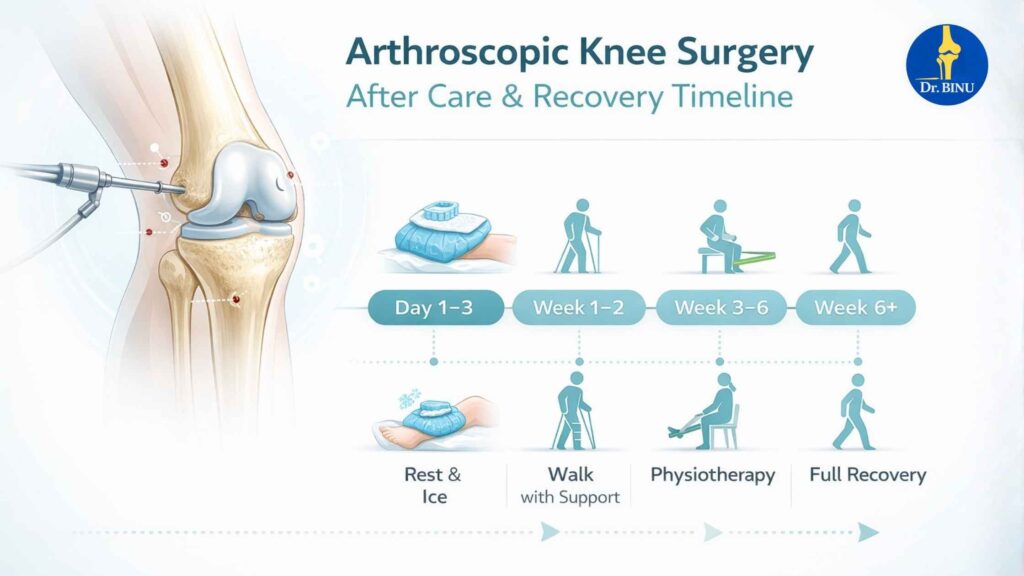
Arthroscopic knee surgery after care & recovery timeline
Arthroscopic knee surgery after care is the process of protecting the knee joint, controlling swelling, and gradually restoring movement following a minimally invasive knee procedure. Proper recovery strategies help patients regain strength and mobility while reducing complications. When managed under expert supervision, healing after arthroscopic knee surgery can be efficient, safe, and predictable.
Dr. Binu Sasidharan Neelakantan is a Specialist Orthopaedic Surgeon in Abu Dhabi with over 20 years of clinical experience in joint replacement, trauma care, and sports medicine. At NMC Specialty Hospital, Electra, Abu Dhabi, he provides advanced minimally invasive procedures including knee arthroscopy and comprehensive guidance for recovery after arthroscopy. His treatment philosophy emphasizes evidence-based care, patient education, and structured rehabilitation for optimal long-term outcomes.
What happens after arthroscopic knee surgery?
After arthroscopic knee surgery, patients typically experience mild swelling, stiffness, and temporary discomfort in the knee joint. These symptoms are expected and improve gradually with appropriate arthroscopy after care. Most patients return home the same day, but recovery depends on the specific procedure performed, such as meniscus repair, ligament reconstruction, or cartilage treatment.
The early phase after arthroscopic knee surgery focuses on protecting the surgical site while initiating gentle movement. During this stage, patients may be advised to:
- Keep the leg elevated to reduce swelling
- Apply cold therapy regularly
- Use prescribed pain medications if needed
- Limit weight-bearing depending on the surgical procedure
- Follow guidance for care after arthroscopic knee surgery provided by the surgeon
Dr. Binu Sasidharan emphasizes patient education and structured rehabilitation, ensuring that every patient understands how to safely progress through the recovery stages.
Why is arthroscopy after care important for successful recovery?
Arthroscopy after care is essential because the knee joint requires controlled rehabilitation to restore normal movement and strength. Without proper recovery management, patients may experience prolonged stiffness, weakness, or delayed healing from arthroscopic knee surgery.
Effective recovery programs focus on multiple goals:
- Reducing inflammation in the knee
- Protecting repaired structures such as ligaments or cartilage
- Restoring range of motion gradually
- Rebuilding muscle strength around the knee
- Preventing complications such as joint stiffness
Under the supervision of an experienced orthopaedic surgeon like Dr. Binu Sasidharan, patients receive personalized rehabilitation plans designed to support healing after arthroscopic knee surgery while allowing safe progression toward normal activity levels.
Recovery timeline after arthroscopic knee surgery
The timeline for recovering from arthroscopic knee surgery varies depending on the procedure performed and the patient’s overall health. However, most recovery phases follow a structured progression.
First 48 hours
The immediate period after arthroscopic knee surgery focuses on controlling swelling and protecting the joint. Patients are typically advised to:
- Rest and elevate the leg
- Use cold packs to reduce swelling
- Keep surgical dressings clean and dry
- Avoid excessive movement of the knee
These steps are critical components of early care after arthroscopic knee surgery and help reduce inflammation while supporting the body’s natural healing response.
Week 1 to week 2
During this stage, patients begin gentle movement exercises. Range-of-motion activities may be introduced to prevent stiffness while supporting healing from arthroscopic knee surgery.
Walking with support may be allowed depending on the procedure performed. For many patients, the focus during this period is gradual mobility and preventing joint stiffness.
Weeks 3 to 6
This phase typically involves strengthening exercises and the beginning of structured rehabilitation programs. Physical therapy after arthroscopic knee surgery becomes increasingly important during this stage.
Therapists may introduce:
- Quadriceps strengthening exercises
- Hamstring activation exercises
- Balance and coordination training
- Controlled weight-bearing exercises
These therapies help support recuperation from arthroscopic knee surgery while restoring muscle function around the knee joint.
Weeks 6 to 12
Most patients see significant improvements in mobility during this stage. Continued therapy after arthroscopic knee surgery focuses on increasing endurance, strengthening muscles, and gradually returning to normal activities.
Patients who underwent sports injury procedures may require additional rehabilitation before returning to athletic activities.
Physical therapy after arthroscopic knee surgery
Physical therapy after arthroscopic knee surgery is one of the most important aspects of recovery. It helps restore knee strength, improve joint stability, and ensure safe movement patterns.
A structured therapy program may include:
- Range-of-motion exercises
- Strength training for thigh muscles
- Joint stability exercises
- Low-impact cardiovascular conditioning
Therapy after arthroscopic knee surgery is typically customized for each patient depending on the surgical procedure performed. Dr. Binu Sasidharan collaborates closely with physiotherapists to ensure patients receive rehabilitation programs tailored to their recovery goals.
Signs that healing after arthroscopic knee surgery is progressing well
Patients recovering from arthroscopic knee surgery often notice steady improvements in knee function as the recovery process progresses. Positive indicators include:
- Reduced swelling and inflammation
- Improved knee flexibility
- Increased ability to bear weight
- Reduced discomfort during movement
- Improved strength in surrounding muscles
These improvements indicate effective healing from arthroscopic knee surgery and successful rehabilitation progress.
Common mistakes during recovery after arthroscopy
While knee arthroscopy is minimally invasive, improper recovery practices can delay healing after arthroscopic knee surgery. Some common mistakes include:
- Returning to intense activities too early
- Ignoring recommended therapy programs
- Skipping follow-up consultations
- Not following proper care after arthroscopic knee surgery instructions
To avoid complications, patients should always follow the surgeon’s recommendations and maintain consistent communication with their healthcare provider.
How long does recuperation from arthroscopic knee surgery take?
Recuperation from arthroscopic knee surgery can vary significantly depending on the complexity of the procedure and the patient’s physical condition. In general:
| Procedure type | Average recovery period |
|---|---|
| Minor diagnostic arthroscopy | 2–4 weeks |
| Meniscus trimming | 4–6 weeks |
| Meniscus repair | 2–3 months |
| Ligament reconstruction | 3–6 months |
Patients who follow structured rehabilitation programs and maintain regular follow-ups often experience smoother recovery while recovering from arthroscopic knee surgery.
About Dr. Binu Sasidharan
Dr. Binu Sasidharan Neelakantan is a Specialist Orthopaedic Surgeon based in Abu Dhabi with extensive expertise in knee arthroscopy, joint replacement, sports injury treatment, and trauma surgery. With more than two decades of experience, he provides advanced orthopaedic care using evidence-based techniques and patient-centered treatment planning.
He currently practices at NMC Specialty Hospital, Electra, Abu Dhabi, where he performs minimally invasive knee procedures and offers comprehensive rehabilitation guidance to support patients recovering from arthroscopic knee surgery. His clinical philosophy focuses on accurate diagnosis, minimally invasive surgical techniques, and personalized rehabilitation strategies that restore mobility and improve long-term joint health.
Through continuous research, international fellowships, and extensive clinical experience, Dr. Binu Sasidharan has developed a reputation for delivering high-quality orthopaedic care while prioritizing patient safety and successful recovery outcomes.
Frequently Asked Questions
Proper arthroscopic knee surgery after care is essential for ensuring a smooth recovery and preventing complications. After arthroscopic knee surgery, patients typically receive detailed instructions regarding wound care, mobility restrictions, medication, and follow-up visits. This phase focuses on protecting the surgical site, controlling swelling, and gradually restoring movement.
At Dr. Binu Sasidharan’s clinic, patients receive personalized arthroscopy after care guidance based on their specific knee condition and procedure performed. The focus is on structured rehabilitation, pain management, and gradual activity progression so that healing after arthroscopic knee surgery progresses safely and efficiently.
Immediately after arthroscopic knee surgery, mild swelling, stiffness, and discomfort are common. Most patients can go home the same day. The early stage after arthroscopy typically involves rest, ice application, elevation of the leg, and the use of prescribed medications to reduce pain and inflammation.
During this period, proper care after arthroscopic knee surgery includes keeping the incision clean and dry, avoiding excessive weight bearing, and following the rehabilitation instructions provided by your surgeon. With proper monitoring and early mobility exercises, recovering from arthroscopic knee surgery can progress steadily.
The timeline for healing from arthroscopic knee surgery varies depending on the procedure performed and the patient’s overall health. Minor procedures such as meniscus trimming may heal within a few weeks, while ligament repairs may require several months of rehabilitation.
In most cases, the early stages of healing after arthroscopic knee surgery occur within the first 4–6 weeks, during which swelling decreases and mobility improves. However, full functional recovery may take longer. Following your surgeon’s rehabilitation plan significantly improves the speed and quality of recuperation from arthroscopic knee surgery.
Physical therapy after arthroscopic knee surgery plays a critical role in restoring joint function, flexibility, and muscle strength. Without structured rehabilitation, patients may experience stiffness, weakness, or limited range of motion.
Therapy after arthroscopic knee surgery typically begins with gentle mobility exercises and gradually progresses to strengthening and balance training. At Dr. Binu Sasidharan’s orthopedic practice, rehabilitation plans are tailored to each patient’s condition to ensure safe and effective recovery.
Patients can significantly support healing after arthroscopic knee surgery by following their surgeon’s instructions carefully. This includes maintaining proper wound care, performing recommended exercises, applying ice to reduce swelling, and avoiding high-impact activities until cleared by the doctor.
Balanced nutrition, adequate hydration, and consistent rehabilitation also contribute to faster healing from arthroscopic knee surgery. Regular follow-up appointments allow the surgeon to track progress and adjust the recovery plan if needed.
Recovering from arthroscopic knee surgery generally occurs in stages. The first stage focuses on pain control and reducing swelling. The second stage involves restoring mobility and improving muscle strength. Finally, the last stage emphasizes functional recovery and a gradual return to normal activities or sports.
Throughout these phases, professional monitoring ensures safe recuperation from arthroscopic knee surgery and helps prevent setbacks. Following a structured recovery timeline significantly improves long-term outcomes.
Most patients can resume light daily activities within a few days to a few weeks after arthroscopic knee surgery, depending on the type of procedure performed. However, high-impact sports or intense physical activity may require several months of rehabilitation.
Your surgeon will evaluate your progress and guide you on when it is safe to increase activity levels. Adhering to proper arthroscopy after care and rehabilitation protocols ensures a safe return to normal function without risking reinjury.
Dr. Binu Sasidharan provides comprehensive support throughout the recovery journey. From the initial surgical procedure to post-operative follow-ups, patients receive expert guidance on care after arthroscopic knee surgery, rehabilitation planning, and activity progression.
The clinic emphasizes individualized treatment plans, ensuring patients receive the right therapy after arthroscopic knee surgery and appropriate monitoring throughout the healing process. This patient-centered approach helps ensure smoother healing after arthroscopic knee surgery and long-term joint health.
