
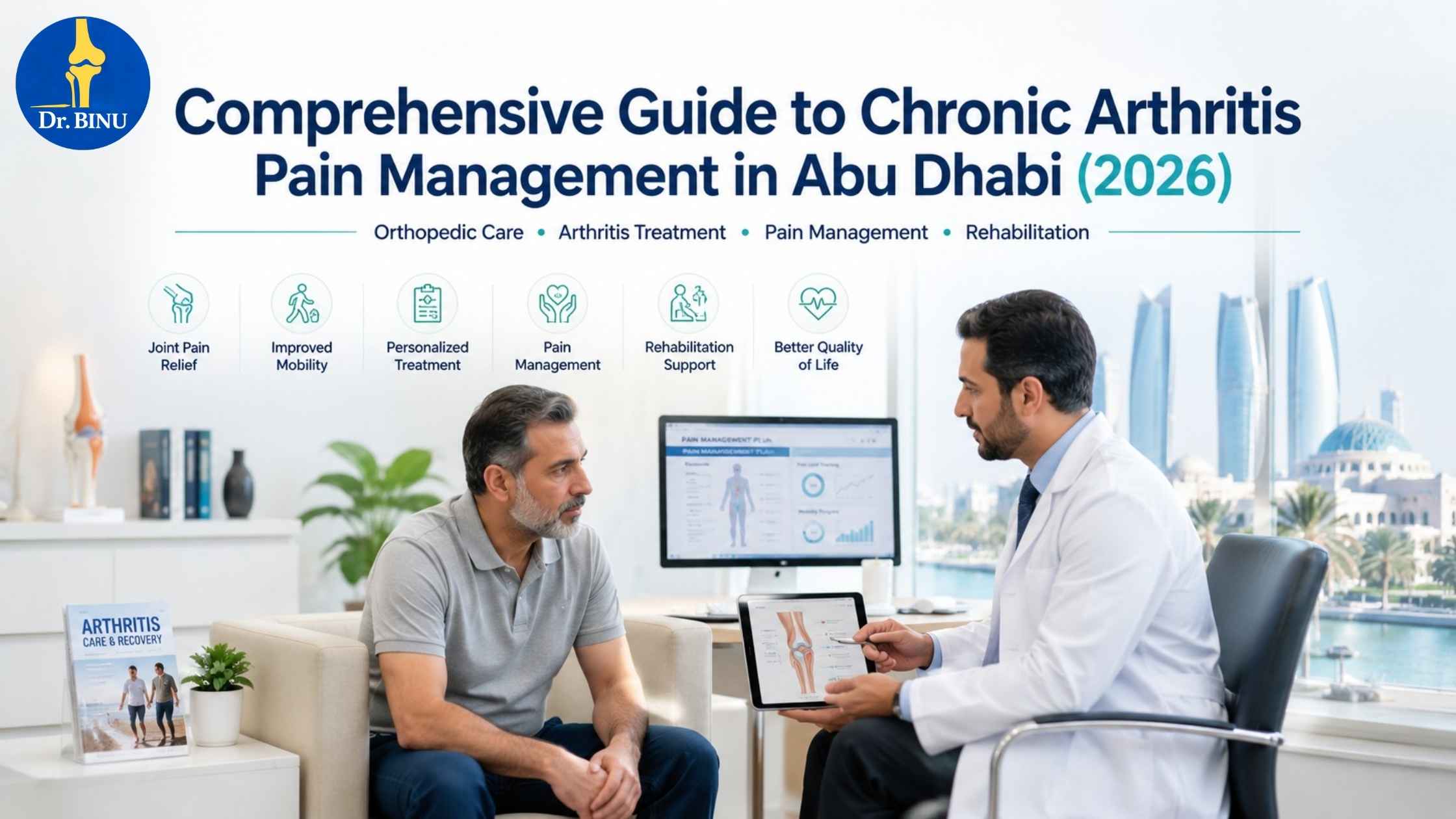
Chronic arthritis pain can significantly affect mobility, independence, sleep quality, and emotional well-being. Modern Arthritis Pain Management Abu Dhabi solutions now combine advanced diagnostics, evidence-based treatments, rehabilitation, lifestyle optimization, and minimally invasive procedures to improve long-term joint health. Under the care of Dr. Binu Sasidharan, patients in Abu Dhabi receive personalized orthopaedic care designed to reduce pain, restore movement, and improve quality of life.
Arthritis is no longer viewed as a condition that only affects elderly individuals. In 2026, orthopaedic specialists increasingly diagnose arthritis in younger adults, athletes, professionals with sedentary lifestyles, and individuals with metabolic disorders. Early intervention plays a major role in preventing progressive joint damage and disability.
What is chronic arthritis and why does it cause persistent pain?
Chronic arthritis is a long-term inflammatory or degenerative condition affecting joints, cartilage, ligaments, and surrounding tissues. Persistent pain develops because joint surfaces become damaged over time, leading to inflammation, stiffness, swelling, reduced mobility, and mechanical instability.
The most common forms of arthritis treated in Abu Dhabi include:
- Osteoarthritis
- Rheumatoid arthritis
- Post-traumatic arthritis
- Psoriatic arthritis
- Gout-related arthritis
- Degenerative joint disorders
Many patients initially ignore mild symptoms such as morning stiffness or occasional swelling. However, untreated arthritis often progresses gradually, resulting in chronic pain and difficulty performing everyday activities like climbing stairs, walking long distances, or standing for prolonged periods.
Why is early arthritis diagnosis important?
Early diagnosis allows orthopaedic specialists to slow disease progression before irreversible joint damage occurs. Prompt treatment may reduce inflammation, preserve cartilage, and improve mobility outcomes.
Dr. Binu Sasidharan emphasizes accurate clinical evaluation combined with advanced imaging studies to identify the root cause of joint pain. His patient-centered approach focuses on identifying biomechanical problems, inflammation patterns, injury history, and lifestyle risk factors before creating a treatment plan.
What are the most common arthritis symptoms?
Patients experiencing arthritis may notice symptoms that gradually worsen over months or years. Common warning signs include:
- Joint stiffness in the morning
- Swelling around joints
- Pain during movement
- Reduced flexibility
- Grinding sensations in joints
- Difficulty walking or climbing stairs
- Joint warmth and redness
- Weakness or instability
Persistent symptoms lasting more than several weeks should always be evaluated by an Orthopaedic specialist Abu Dhabi to avoid delayed treatment.
How does Knee arthritis treatment improve mobility?
Knee arthritis treatment aims to reduce pain, improve joint alignment, preserve cartilage function, and restore movement. Modern treatments may involve physical therapy, regenerative medicine approaches, medication management, minimally invasive procedures, or joint replacement surgery depending on severity.
The knee is one of the most commonly affected joints because it bears significant body weight and repetitive stress throughout life. Patients with advanced knee arthritis frequently report:
- Pain while walking
- Difficulty sitting or standing
- Reduced range of motion
- Knee locking or instability
- Night pain affecting sleep
Dr. Binu Sasidharan uses a comprehensive evaluation strategy to determine whether patients benefit more from conservative therapies or surgical intervention. Because every patient has different activity levels, medical histories, and mobility goals, individualized treatment planning is essential.
What are the best Non-surgical arthritis care options in 2026?
Modern Non-surgical arthritis care focuses on reducing inflammation, improving joint function, and delaying or avoiding surgery whenever possible. Conservative arthritis treatment has advanced considerably in recent years, allowing many patients to experience meaningful relief without hospitalization.
Common non-surgical arthritis treatments include:
Physical therapy and rehabilitation
Targeted physiotherapy improves flexibility, strengthens muscles supporting affected joints, and enhances movement mechanics. Rehabilitation programs are customized based on pain severity and functional limitations.
Weight management programs
Excess body weight increases pressure on joints, especially knees and hips. Even moderate weight reduction may significantly decrease joint stress and improve pain control.
Medication-based pain management
Anti-inflammatory medications, analgesics, and supportive therapies may help control flare-ups and chronic discomfort under medical supervision.
Injection therapies
Advanced injection-based treatments may support lubrication, reduce inflammation, and improve joint mobility in selected patients.
Lifestyle modifications
Simple adjustments such as ergonomic improvements, activity modification, posture correction, and low-impact exercise can contribute to long-term arthritis management.
How does joint inflammation therapy help arthritis patients?
joint inflammation therapy helps reduce swelling, pain, and stiffness by targeting inflammatory processes within affected joints. Effective inflammation control can slow cartilage damage and improve long-term joint function.
Inflammation is one of the major drivers of arthritis progression. Chronic inflammation damages cartilage surfaces, weakens surrounding structures, and contributes to persistent pain signals. Modern orthopaedic care combines medication strategies, rehabilitation, biomechanical correction, and advanced therapies to address inflammation more effectively.
| Therapy Type | Primary Goal | Benefits |
|---|---|---|
| Physical Therapy | Strengthening and mobility | Improved joint stability |
| Medication Management | Inflammation reduction | Pain control |
| Injection Therapy | Joint lubrication | Reduced stiffness |
| Lifestyle Modification | Stress reduction on joints | Improved long-term mobility |
| Surgical Intervention | Joint reconstruction | Restored functionality |
When is surgery recommended for arthritis?
Surgery is generally considered when conservative treatment no longer provides adequate relief and daily activities become severely limited. Advanced arthritis can significantly impact independence and emotional health, making surgical intervention necessary in certain cases.
Common surgical procedures performed by Dr. Binu Sasidharan include:
- Total knee replacement
- Hip replacement surgery
- Shoulder replacement procedures
- Knee arthroscopy
- Ligament reconstruction
- Joint reconstruction surgery
Modern arthroplasty techniques are designed to improve precision, reduce tissue trauma, and enhance postoperative recovery outcomes.
What makes minimally invasive orthopaedic procedures beneficial?
Minimally invasive procedures typically involve smaller incisions, reduced soft tissue disruption, shorter hospital stays, and faster rehabilitation compared to traditional open surgery.
Benefits may include:
- Reduced postoperative pain
- Lower infection risk
- Faster recovery timelines
- Improved mobility restoration
- Reduced hospitalization duration
- Better cosmetic outcomes
As an experienced orthopaedic surgeon with advanced fellowship training in arthroplasty and arthroscopy, Dr. Binu Sasidharan integrates evidence-based minimally invasive techniques wherever clinically appropriate.
How can patients manage arthritis symptoms at home?
Home-based arthritis management plays an important role in long-term symptom control. Consistency is often more important than intensity when managing chronic joint pain.
Daily arthritis management tips
- Maintain a healthy body weight
- Stay physically active with low-impact exercise
- Use supportive footwear
- Avoid prolonged inactivity
- Practice stretching exercises regularly
- Improve workstation ergonomics
- Follow prescribed rehabilitation programs
- Attend routine orthopaedic follow-ups
Why choose Dr. Binu Sasidharan for arthritis care in Abu Dhabi?
Dr. Binu Sasidharan is a highly experienced Specialist Orthopaedic Surgeon in Abu Dhabi with more than 20 years of expertise in orthopaedics, arthroplasty, sports medicine, trauma care, and degenerative joint management.
His approach combines:
- Evidence-based treatment planning
- Advanced arthroplasty expertise
- Comprehensive diagnostics
- Patient-focused communication
- Minimally invasive surgical techniques
- International healthcare quality standards
Patients benefit from his multidisciplinary understanding of orthopaedic care, rehabilitation, patient safety, and healthcare quality management.
What should patients expect during arthritis consultation?
An arthritis consultation typically includes a detailed assessment of symptoms, medical history, mobility limitations, previous injuries, imaging studies, and physical examination findings.
During evaluation, Dr. Binu Sasidharan carefully explains:
- The likely cause of symptoms
- Severity of joint degeneration
- Recommended investigations
- Non-surgical and surgical options
- Expected recovery timelines
- Long-term joint preservation strategies
Transparent communication and individualized care remain central to his treatment philosophy.
How is arthritis care evolving in Abu Dhabi in 2026?
Orthopaedic care in Abu Dhabi continues to evolve through technological innovation, advanced imaging, precision-guided procedures, and personalized rehabilitation strategies.
Key developments include:
- Enhanced joint replacement technologies
- Improved rehabilitation protocols
- Earlier diagnosis using advanced imaging
- Data-driven treatment planning
- Greater emphasis on conservative management
- Improved patient safety standards
Patients today have access to more effective and individualized treatment pathways than ever before.
About Dr. Binu Sasidharan
Dr. Binu Sasidharan Neelakantan is a trusted orthopaedic surgeon based in Abu Dhabi specializing in joint replacement surgery, sports medicine, arthroscopy, trauma care, and chronic musculoskeletal conditions. He currently practices at NMC Specialty Hospital, Electra, Abu Dhabi.
With qualifications including MS Orthopaedics, ISAKOS-approved fellowship training in arthroplasty, fellowship training in knee arthroscopy, and advanced certifications in healthcare quality and patient safety, Dr. Binu Sasidharan offers a unique combination of surgical expertise and patient-focused care.
His multilingual communication abilities in English, Hindi, Malayalam, and Tamil help patients from diverse communities feel comfortable and well-informed throughout their treatment journey.
Conclusion
Living with arthritis does not mean accepting constant pain or restricted mobility. Advances in Arthritis Pain Management Abu Dhabi now provide patients with highly personalized treatment pathways ranging from Non-surgical arthritis care and rehabilitation to advanced Knee arthritis treatment and minimally invasive joint reconstruction procedures.
Under the expertise of Dr. Binu Sasidharan, patients receive compassionate, evidence-based orthopaedic care focused on restoring mobility, reducing pain, and improving long-term quality of life. Early evaluation and timely intervention remain essential for preventing progressive joint damage and maintaining active, independent living.
Frequently Asked Questions
What are the most effective options for Arthritis Pain Management Abu Dhabi?
Arthritis Pain Management Abu Dhabi typically involves a combination of medical evaluation, lifestyle modification, physiotherapy, medication management, and advanced regenerative or minimally invasive procedures depending on the severity of the condition. Chronic arthritis pain often develops gradually and may affect mobility, sleep quality, and overall daily function.
Dr. Binu Sasidharan focuses on identifying the root cause of persistent joint pain rather than simply masking symptoms. Patients may receive personalized care plans that include exercise guidance, weight management support, targeted injections, and long-term joint preservation strategies designed to improve mobility and reduce inflammation.
When should I seek treatment for chronic arthritis pain?
You should seek medical attention if joint pain lasts for several weeks, worsens over time, or begins to interfere with walking, climbing stairs, exercise, or daily activities. Swelling, stiffness in the morning, reduced range of motion, and recurring discomfort are common warning signs that should not be ignored.
Early diagnosis can help slow joint deterioration and improve long-term outcomes. Consulting an experienced Orthopaedic specialist Abu Dhabi patients trust can help identify whether symptoms are caused by osteoarthritis, rheumatoid arthritis, cartilage degeneration, or another inflammatory joint condition.
What does Knee arthritis treatment usually involve?
Knee arthritis treatment depends on the stage of arthritis, the patient’s activity level, and the degree of cartilage wear. Mild to moderate cases are often managed through physiotherapy, strengthening exercises, anti-inflammatory medications, supportive braces, and guided mobility programs.
In more advanced cases, image-guided injections or minimally invasive procedures may be recommended to reduce pain and improve function. Dr. Binu Sasidharan carefully evaluates each patient before suggesting surgical intervention, ensuring that conservative measures are explored whenever appropriate.
Can Non-surgical arthritis care really help avoid surgery?
Yes, Non-surgical arthritis care can significantly improve symptoms and delay or even prevent the need for surgery in many patients. Treatment approaches often focus on reducing inflammation, improving joint stability, strengthening surrounding muscles, and preserving mobility.
Many individuals with early or moderate arthritis respond well to structured rehabilitation programs, weight optimization, activity modification, and targeted pain management strategies. A customized treatment plan created by Dr. Binu Sasidharan may help patients remain active and independent while minimizing joint stress.
How does joint inflammation therapy improve arthritis symptoms?
joint inflammation therapy is designed to reduce swelling, stiffness, and pain inside affected joints. Chronic inflammation can accelerate cartilage damage and make movement increasingly difficult over time. Managing inflammation early is one of the most important aspects of long-term arthritis care.
Depending on the patient’s condition, therapy may include medication management, guided rehabilitation, lifestyle adjustments, or injection-based treatments that target inflamed tissues directly. By controlling inflammation effectively, patients often experience better mobility, reduced pain flare-ups, and improved quality of life.
Why do patients choose Dr. Binu Sasidharan for arthritis care?
Dr. Binu Sasidharan is known for providing patient-focused orthopaedic care with an emphasis on accurate diagnosis, conservative treatment whenever possible, and long-term joint preservation. His approach combines clinical expertise with personalized treatment planning tailored to the patient’s age, activity level, lifestyle, and severity of arthritis.
Patients appreciate clear communication, evidence-based recommendations, and structured rehabilitation guidance that supports recovery beyond the clinic setting. The goal is not only pain relief but also restoring confidence in movement and improving everyday function.
Are lifestyle changes important in managing chronic arthritis?
Lifestyle changes play a major role in controlling arthritis symptoms and slowing disease progression. Maintaining a healthy weight can reduce pressure on weight-bearing joints such as the knees and hips, while regular low-impact exercise helps improve flexibility and muscle support around affected joints.
Patients are often advised to follow joint-friendly exercise routines, improve posture, stay physically active, and avoid repetitive strain activities that worsen inflammation. Proper nutrition, sleep quality, and stress management can also contribute to better pain control and improved mobility over time.
What can I expect during my first arthritis consultation?
During the first consultation, the doctor will review your medical history, current symptoms, activity limitations, and any previous treatments you may have tried. A physical examination is usually performed to assess joint movement, swelling, tenderness, and alignment.
Imaging studies such as X-rays or MRI scans may be recommended if necessary. Based on the findings, a detailed treatment plan is created to address pain relief, mobility improvement, and long-term joint health. The consultation also gives patients the opportunity to discuss goals, concerns, and expectations regarding treatment outcomes.
