
Home > Services
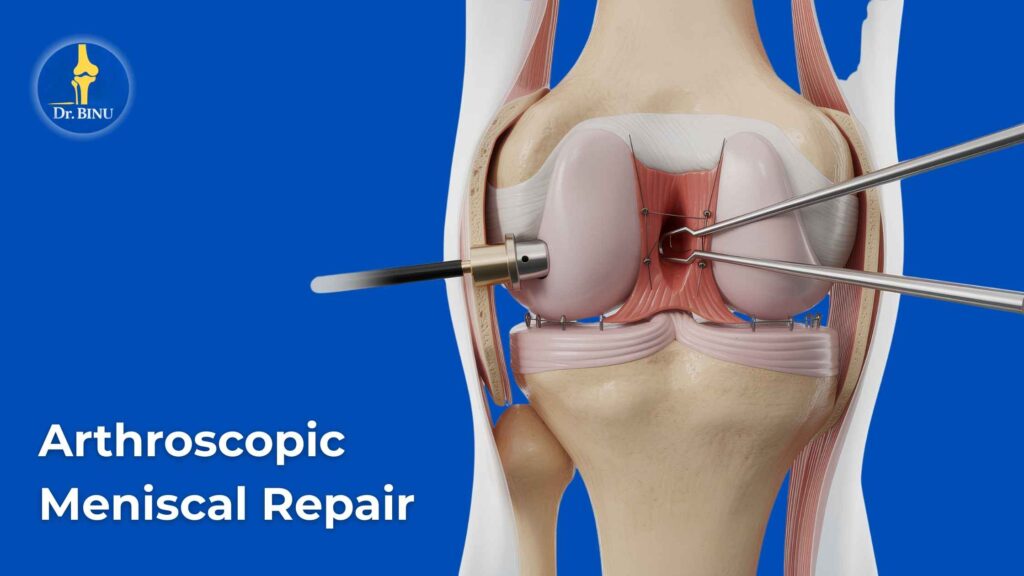
Arthroscopic meniscal repair is a minimally invasive surgical procedure used to repair a torn meniscus and preserve the natural cushioning structure of the knee. When performed early and precisely, it restores stability, relieves pain, and helps prevent long-term joint degeneration. At NMC Specialty Hospital, Electra, Abu Dhabi, Dr. Binu Sasidharan provides advanced arthroscopic meniscal repair abu dhabi using evidence-based techniques and over two decades of orthopaedic expertise.
Arthroscopic meniscal repair is a specialized form of minimally invasive knee surgery that involves repairing a torn meniscus through small incisions using a camera (arthroscope) and precision instruments. Unlike meniscus removal, repair focuses on preserving the cartilage to maintain knee biomechanics and reduce the risk of osteoarthritis.
The meniscus acts as a shock absorber between the femur and tibia. When torn due to sports injuries, twisting movements, or degeneration, it can lead to:
Dr. Binu Sasidharan evaluates whether repair is feasible based on tear type, location, vascular supply, and patient activity level.
Meniscus tear treatment uae is recommended for patients experiencing ongoing knee discomfort, mechanical symptoms, or restricted mobility after a confirmed tear on MRI. While some minor tears may respond to physiotherapy, surgical repair is often advised for:
As an experienced knee arthroscopy surgeon, Dr. Binu carefully differentiates between cases requiring repair, partial meniscectomy, or conservative therapy.
The procedure typically follows these steps:
This minimally invasive knee surgery technique reduces soft tissue damage, shortens hospital stay, and promotes faster rehabilitation compared to open surgery.
Dr. Binu Sasidharan Neelakantan is a Specialist Orthopaedic Surgeon in Abu Dhabi with advanced fellowship training in knee arthroscopy and arthroplasty. His qualifications include:
His approach integrates surgical precision with strict adherence to international patient safety standards. Patients benefit from:
Preserving the meniscus protects long-term joint health. Removal increases the risk of cartilage wear and early arthritis. When feasible, arthroscopic repair provides:
| Meniscal Repair | Meniscus Removal |
|---|---|
| Preserves cartilage | Removes damaged tissue |
| Maintains shock absorption | Reduced cushioning |
| Lowers arthritis risk | Higher long-term degeneration risk |
| Longer recovery but better durability | Shorter recovery but less protective |
Dr. Binu prioritizes joint preservation whenever possible, especially in young and active individuals.
Yes. In certain cases, meniscal tears coexist with cartilage damage. Cartilage repair surgery may be performed simultaneously to restore joint surface integrity. This combined approach improves long-term outcomes and reduces progression toward arthritis.
Advanced imaging and arthroscopic assessment help determine whether cartilage repair surgery is necessary.
As part of comprehensive sports knee injury treatment, Dr. Binu also manages:
Integrated management ensures optimal structural stability and functional recovery.
Meniscus surgery recovery varies depending on tear type and fixation method. Since repair requires biological healing, recovery may take longer than simple trimming. Typical phases include:
Strict adherence to rehabilitation guidelines significantly influences meniscus surgery recovery success. Dr. Binu works closely with physiotherapists to ensure safe and effective progression.
Knee locking treatment becomes necessary when a displaced meniscal fragment prevents smooth joint movement. Mechanical locking, catching, or inability to fully extend the knee requires prompt orthopaedic assessment. Delayed care may worsen cartilage damage.
Minimally invasive knee surgery is considered safe when performed by an experienced specialist. Risks are low and include:
Dr. Binu’s certifications in healthcare quality, patient safety, and risk management reinforce structured surgical protocols that prioritize patient wellbeing.
Dr. Binu Sasidharan Neelakantan is a Specialist Orthopaedic Surgeon based in Abu Dhabi, UAE, practicing at NMC Specialty Hospital, Electra. With over 20 years of clinical experience, he specializes in joint replacement, knee arthroscopy, trauma surgery, and sports medicine. His practice emphasizes accurate diagnosis, minimally invasive techniques, patient education, and long-term mobility restoration.
Fluent in English, Hindi, Malayalam, and Tamil, he serves a diverse patient population across the UAE. His commitment to research, academic participation, and continuous professional development ensures that patients receive care aligned with global standards.
Arthroscopic meniscal repair is a minimally invasive knee surgery performed to stitch and preserve a torn meniscus rather than remove it. The meniscus acts as a shock absorber in the knee, and preserving it is critical for long-term joint health. Dr. Binu Sasidharan recommends this procedure when the tear is located in a vascular zone of the meniscus where healing potential is good, especially in younger or active patients.
This approach is commonly advised for patients with persistent pain, swelling, or mechanical symptoms such as catching or instability that do not improve with conservative care.
Patients who have a recent meniscus tear, especially due to sports or twisting injuries, are often good candidates for arthroscopic meniscal repair abu dhabi. Those experiencing knee locking, repeated swelling, or pain during activity should seek evaluation.
Dr. Binu Sasidharan carefully assesses MRI findings, tear pattern, age, activity level, and joint alignment before recommending repair. Preserving the meniscus whenever possible is a priority to reduce future risk of arthritis.
Meniscus tear treatment uae today emphasizes preservation over removal. In the past, torn portions were often trimmed out (partial meniscectomy). However, research shows that removing meniscal tissue can accelerate cartilage wear.
With arthroscopic repair techniques, Dr. Binu Sasidharan sutures the torn edges together, allowing the tissue to heal naturally. This method protects knee biomechanics and supports long-term joint function.
A skilled knee arthroscopy surgeon ensures precise diagnosis, minimal tissue trauma, and accurate suture placement. Surgical expertise directly influences healing rates and long-term outcomes.
Dr. Binu Sasidharan combines advanced arthroscopic techniques with structured rehabilitation protocols, ensuring that patients regain stability, strength, and confidence in their knee.
Yes, in some cases, cartilage repair surgery is performed alongside meniscal repair if there is associated cartilage damage. Addressing both problems during the same minimally invasive knee surgery helps optimize joint preservation.
Dr. Binu Sasidharan evaluates the entire joint environment during arthroscopy and treats any coexisting cartilage injuries to improve long-term outcomes.
Absolutely. Arthroscopic repair is a cornerstone of sports knee injury treatment. Athletes frequently sustain meniscus tears from pivoting, jumping, or sudden directional changes.
Early surgical repair, when indicated, helps restore joint stability and reduces the risk of recurrent symptoms. Dr. Binu Sasidharan designs personalized rehabilitation plans to safely guide athletes back to sport.
Knee locking often occurs when a torn meniscus fragment interferes with normal joint movement. Arthroscopic repair repositions and secures the torn tissue, restoring smooth motion.
By addressing the structural cause of the problem, this approach offers effective knee locking treatment while preserving as much natural tissue as possible.
Meniscus surgery recovery after repair is typically longer than after simple trimming because the tissue needs time to heal. Patients may use crutches for several weeks and follow a structured physiotherapy program.
Dr. Binu Sasidharan closely monitors healing progress, gradually advancing weight-bearing and strengthening exercises. Most patients return to regular activities within a few months, while athletes may require additional rehabilitation before full return to sport.

Dr. Binu Sasidharan
MBBS, MS Ortho, D’ Ortho
Fellowship in Knee Surgery | MBA | MSc | CPHQ | CPPS | CPHRM | CHMP | CMQ |
PGDHM | Certified Six Sigma Green Belt | FISQua
Specialist Orthopaedic Surgeon – Knee Arthroscopy Surgeon, Trauma and Sports Medicine Specialist
NMC Specialty Hospital, Abu Dhabi, UAE