
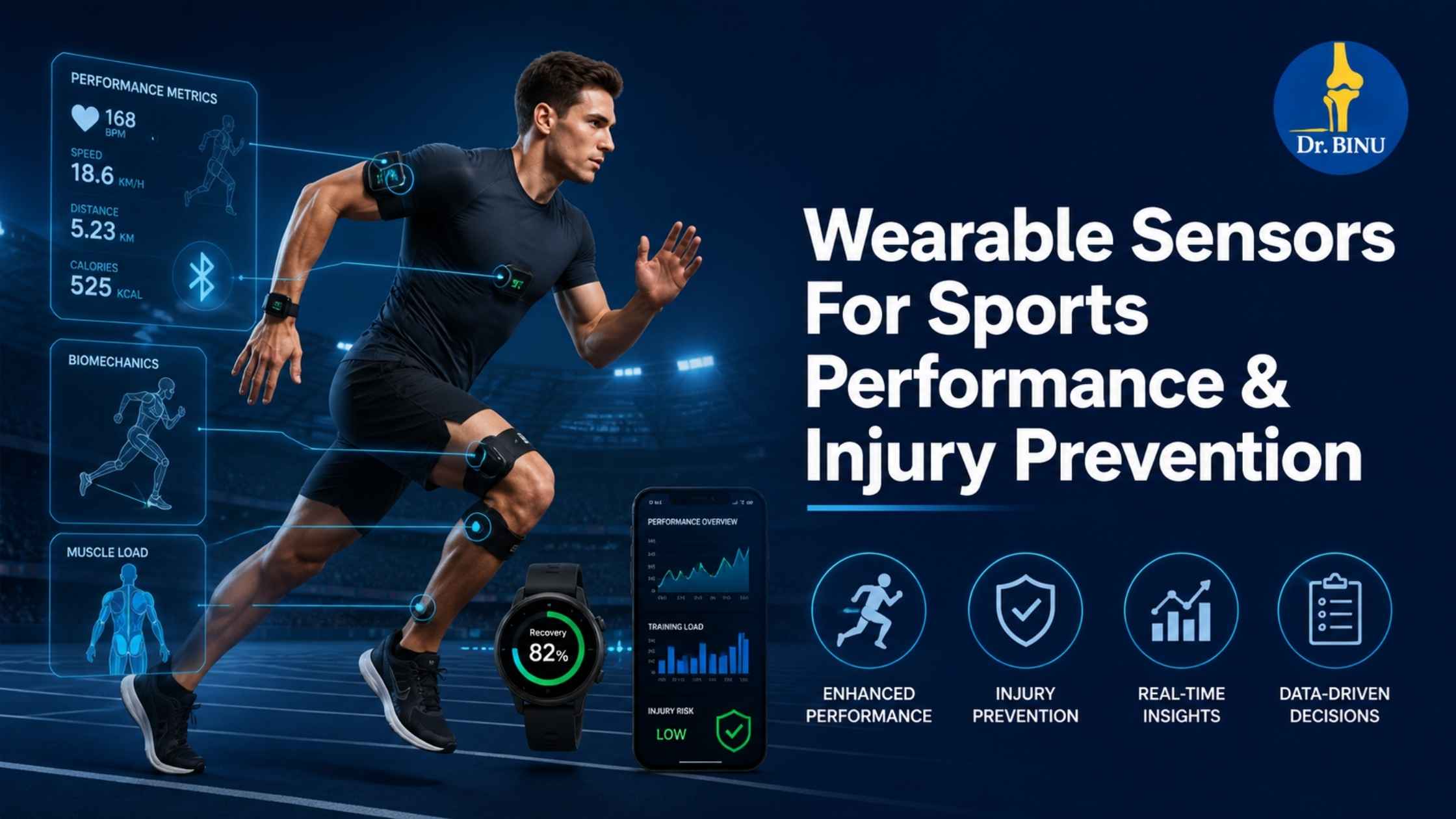
Wearable sensors for sports performance are advanced digital tools that track movement, biomechanics, and physiological data in real time to enhance athletic output and reduce injury risk. These technologies are transforming how athletes train, recover, and prevent injuries under expert orthopaedic guidance.
In modern sports medicine, the integration of wearable sensors for sports performance has created a new era of precision care. Under the expertise of Dr. Binu Sasidharan Neelakantan, a highly experienced Specialist Orthopaedic Surgeon in Abu Dhabi, these innovations are used to bridge the gap between performance optimization and injury prevention.
What are wearable sensors in sports and how do they work?
Wearable sensors are compact, technology-driven devices embedded in clothing, straps, or accessories that monitor body metrics such as motion, muscle activity, joint angles, and fatigue levels. These devices collect continuous data, enabling healthcare professionals to make informed decisions regarding training loads and injury risk.
- Track biomechanics such as gait and joint alignment
- Measure muscle activity and fatigue
- Monitor heart rate and exertion levels
- Analyze movement symmetry and efficiency
With the rise of wearable health devices UAE, athletes and patients now have access to real-time insights that were previously only available in specialized labs.
Why are wearable sensors important for injury prevention?
Injury prevention technology sports has become essential due to the increasing physical demands placed on athletes. Wearable sensors help identify early warning signs of injury, such as muscle imbalance, overuse, and improper biomechanics.
Dr. Binu Sasidharan utilizes injury prevention technology sports as part of a comprehensive orthopaedic approach to detect risks before they evolve into serious conditions.
Key benefits include:
- Early detection of abnormal movement patterns
- Prevention of overtraining and fatigue-related injuries
- Personalized training adjustments
- Reduced recovery time through proactive care
How does sports tech injury prevention UAE improve athlete outcomes?
The adoption of sports tech injury prevention UAE is rapidly growing, especially in high-performance environments. This technology allows clinicians to continuously monitor athletes and intervene early.
Under Dr. Binu’s care, sports tech is integrated into treatment protocols for conditions such as ligament injuries, meniscus tears, and post-surgical rehabilitation.
Clinical applications include:
- Monitoring ACL recovery post-surgery
- Assessing joint stability during rehabilitation
- Tracking return-to-play readiness
- Reducing reinjury risk through data-driven decisions
What are athlete monitoring devices UAE and how are they used?
Athlete monitoring devices UAE refer to wearable systems that track physical performance metrics in real time. These devices are widely used by professional athletes, fitness enthusiasts, and patients undergoing rehabilitation.
| Device Type | Function | Clinical Benefit |
|---|---|---|
| Motion Sensors | Track joint angles and movement | Identify biomechanical inefficiencies |
| Heart Rate Monitors | Measure cardiovascular exertion | Prevent overtraining |
| Muscle Sensors | Monitor muscle activation | Detect imbalances |
| GPS Trackers | Analyze speed and distance | Optimize performance load |
Dr. Binu Sasidharan incorporates these technologies into patient care to ensure precision rehabilitation and performance optimization.
How does fitness tracking for rehab UAE support recovery?
Fitness tracking for rehab UAE is a critical component of modern orthopaedic recovery. It allows continuous monitoring of patient progress outside the clinic, ensuring adherence to rehabilitation protocols.
Patients recovering from surgeries such as ACL reconstruction or knee arthroscopy benefit significantly from real-time feedback and guided exercise monitoring.
Advantages of fitness tracking in rehab:
- Ensures correct exercise execution
- Tracks progress objectively
- Provides motivation through measurable goals
- Reduces chances of complications
With over 20 years of clinical experience, Dr. Binu combines traditional rehabilitation methods with advanced digital monitoring to achieve optimal outcomes.
What conditions benefit from wearable sensor technology?
Wearable sensors are highly effective in managing a wide range of orthopaedic and sports-related conditions:
- Ligament injuries (ACL, MCL)
- Meniscus tears
- Muscle strains
- Post-surgical rehabilitation
- Chronic joint pain and osteoarthritis
- Sports-related overuse injuries
These tools provide valuable data that enhances diagnosis, treatment planning, and long-term recovery strategies.
How does Dr. Binu Sasidharan integrate wearable technology into care?
Dr. Binu Sasidharan Neelakantan is a Specialist Orthopaedic Surgeon in Abu Dhabi who integrates advanced wearable technology into patient care for improved outcomes. His approach combines clinical expertise with evidence-based digital tools.
His approach includes:
- Comprehensive patient assessment
- Use of wearable sensors for movement analysis
- Personalized rehabilitation programs
- Continuous monitoring and feedback
- Data-driven decision-making
This holistic approach ensures that patients receive not only treatment but also long-term prevention strategies.
What makes wearable health devices UAE essential for modern athletes?
The increasing adoption of wearable health devices UAE reflects a shift toward preventive healthcare and performance optimization. These devices empower athletes with actionable insights into their physical condition.
They are particularly valuable for:
- Professional athletes
- Fitness enthusiasts
- Post-surgical patients
- Individuals with chronic musculoskeletal conditions
How to choose the right wearable sensor for sports performance?
Selecting the right device depends on the athlete’s goals, sport type, and medical condition.
- Identify your performance or rehabilitation goals
- Choose devices with clinically validated metrics
- Ensure compatibility with professional monitoring systems
- Consult an orthopaedic specialist for guidance
Under expert supervision, these tools can significantly enhance both performance and safety.
About Dr. Binu Sasidharan
Dr. Binu Sasidharan Neelakantan is a Specialist Orthopaedic Surgeon based in Abu Dhabi, UAE, with over 20 years of experience in orthopaedics, sports medicine, and joint replacement. He practices at NMC Specialty Hospital, Electra, Abu Dhabi, providing advanced musculoskeletal care using both surgical and non-surgical techniques.
His expertise includes knee arthroscopy, ACL reconstruction, joint replacement surgeries, and trauma care. With international training and certifications in healthcare quality and patient safety, Dr. Binu is known for delivering evidence-based, patient-centered care.
Fluent in English, Hindi, Malayalam, and Tamil, he effectively communicates with a diverse patient population. His commitment to innovation and precision makes him a trusted choice for athletes and patients seeking advanced orthopaedic solutions in the UAE.
Frequently Asked Questions
What are wearable sensors for sports performance and how do they help athletes?
wearable sensors for sports performance are advanced devices that track movement, biomechanics, heart rate, muscle activity, and workload in real time. Dr. Binu Sasidharan uses these tools to analyze athletic performance with precision, helping athletes optimize training, detect inefficiencies, and improve overall performance while reducing risk factors associated with overtraining or improper technique.
How does sports tech injury prevention UAE benefit professional and amateur athletes?
sports tech injury prevention UAE focuses on early detection of stress, imbalance, and fatigue patterns. With Dr. Binu Sasidharan’s approach, athletes receive data-driven insights that help prevent injuries before they occur. This proactive strategy is beneficial for both elite professionals and recreational athletes looking to stay active without setbacks.
What are athlete monitoring devices UAE and how are they used in training programs?
athlete monitoring devices UAE include GPS trackers, motion sensors, and biometric wearables that collect real-time performance data. Dr. Binu Sasidharan integrates these devices into personalized training programs to monitor workload, recovery, and performance metrics, ensuring athletes train efficiently and safely.
Can wearable technology support rehabilitation after sports injuries?
Yes, fitness tracking for rehab UAE plays a crucial role in recovery. Dr. Binu Sasidharan uses wearable technology to monitor healing progress, track movement patterns, and ensure patients follow safe rehabilitation protocols. This allows for gradual and measurable recovery, reducing the risk of re-injury.
What makes injury prevention technology sports essential in modern athletics?
injury prevention technology sports provides data-backed insights into how the body responds to physical stress. Dr. Binu Sasidharan leverages this technology to identify risk factors such as muscle imbalances, poor biomechanics, and fatigue, enabling timely interventions that help athletes maintain peak performance without compromising health.
Are wearable health devices UAE suitable for all types of athletes?
wearable health devices UAE are designed for a wide range of users, from beginners to elite athletes. Dr. Binu Sasidharan customizes their use based on individual goals, fitness levels, and medical history, ensuring that every athlete benefits from accurate and relevant data insights.
How accurate are wearable sensors in preventing injuries?
Modern wearable sensors are highly accurate when used correctly and interpreted by experts. Dr. Binu Sasidharan combines sensor data with clinical expertise to provide reliable insights, ensuring that preventive strategies are both effective and tailored to each athlete’s unique needs.
What sets Dr. Binu Sasidharan’s approach apart in sports performance and injury prevention?
Dr. Binu Sasidharan combines clinical knowledge with cutting-edge wearable technology to deliver personalized, data-driven care. His approach integrates performance enhancement, injury prevention, and rehabilitation into a single, cohesive strategy, helping athletes achieve sustainable results while minimizing risks.
