
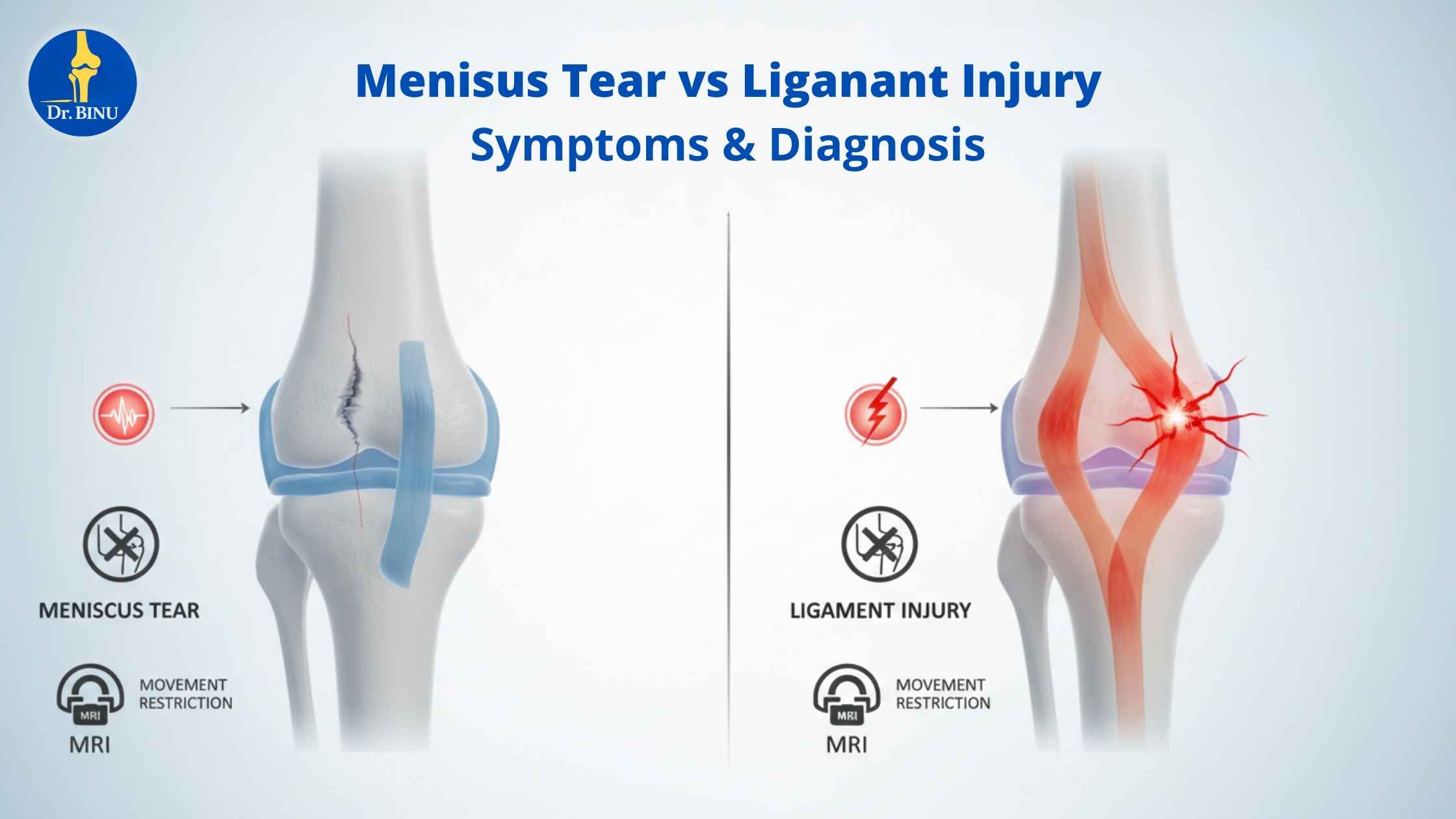
Meniscus Tear vs Ligament Injury: Symptoms & Diagnosis
A meniscus tear vs ligament strain comparison is essential to understand knee injuries accurately. While both conditions affect knee stability and mobility, they differ in symptoms, causes, and treatment approaches. Early identification of the correct injury type ensures effective recovery and prevents long-term complications.
What is the difference between a meniscus tear and a ligament injury?
The key difference lies in the structure affected. A meniscus tear involves damage to cartilage that cushions the knee joint, whereas ligament injuries involve overstretching or tearing of connective tissues that stabilize the joint.
- Meniscus tear: Cartilage damage affecting shock absorption
- Ligament injury: Damage to stabilizing bands like ACL or MCL
- Impact: Meniscus affects movement cushioning, ligaments affect stability
Understanding this distinction helps patients interpret knee injury symptoms comparison accurately and seek appropriate treatment.
What are the most common knee injury symptoms comparison indicators?
Recognizing the differences in symptoms is crucial when evaluating knee injury symptoms comparison scenarios.
| Symptom | Meniscus Tear | Ligament Injury |
|---|---|---|
| Pain location | Localized along joint line | Generalized or specific ligament area |
| Swelling | Gradual | Rapid (especially ACL injuries) |
| Instability | Rare | Common |
| Locking sensation | Common | Rare |
| Movement restriction | Moderate | Severe in some cases |
This structured comparison makes it easier for patients and clinicians to differentiate conditions effectively.
What is ACL vs meniscus tear and how do they differ?
When comparing ACL vs meniscus tear, the ACL (Anterior Cruciate Ligament) is responsible for knee stability, while the meniscus provides cushioning between bones.
- ACL injury:
- Often occurs during sudden stops or direction changes
- Produces a “popping” sound
- Immediate swelling and instability
- Meniscus tear:
- Occurs during twisting movements
- Delayed swelling
- Clicking or locking sensation
This distinction is vital for athletes and active individuals who frequently experience knee stress.
What are the key knee ligament injury signs?
Identifying knee ligament injury signs early helps prevent worsening of the condition.
- Sudden pain after injury
- Swelling within hours
- Feeling of instability or “giving way”
- Difficulty bearing weight
- Reduced range of motion
These symptoms often indicate ligament damage and require prompt evaluation by an orthopaedic specialist.
How is knee pain diagnosis UAE performed?
Accurate knee pain diagnosis UAE involves a systematic approach combining clinical evaluation and advanced imaging techniques.
1. Clinical examination
- Assessment of pain location
- Evaluation of swelling and mobility
- Stability testing of ligaments
2. Imaging tests
- X-rays to rule out fractures
- MRI scans to assess soft tissue damage
- Ultrasound in selected cases
3. Functional assessment
- Gait analysis
- Movement pattern evaluation
This comprehensive approach ensures precise identification of whether the issue is a meniscus tear vs ligament strain.
What knee injury tests are used to confirm diagnosis?
Several knee injury tests are used by specialists to differentiate between meniscus and ligament injuries.
- McMurray test: Detects meniscus tears
- Lachman test: Assesses ACL integrity
- Anterior drawer test: Evaluates ligament stability
- Pivot shift test: Confirms ACL injury severity
These clinical tests, combined with imaging, provide a definitive diagnosis.
Why early diagnosis matters for knee injuries
Delaying treatment can lead to complications such as chronic instability, cartilage damage, and early arthritis.
- Prevents worsening of injury
- Reduces recovery time
- Improves long-term joint function
- Avoids surgical intervention when possible
Advanced treatment options available
Treatment depends on the severity and type of injury.
Non-surgical treatments
- Physiotherapy and rehabilitation
- Medication for pain and inflammation
- Activity modification
Surgical treatments
- Arthroscopic meniscus repair
- ACL reconstruction
- Ligament repair procedures
Modern minimally invasive techniques ensure faster recovery and better outcomes.
About Dr. Binu Sasidharan
Dr. Binu Sasidharan Neelakantan is a Specialist Orthopaedic Surgeon based in Abu Dhabi, UAE, with over 20 years of experience in orthopaedics, sports injuries, and joint replacement. He practices at NMC Specialty Hospital, Electra, Abu Dhabi, offering advanced care for knee injuries including meniscus tear vs ligament strain conditions.
With expertise in arthroscopy and ligament reconstruction, Dr. Binu provides personalized treatment plans based on accurate diagnosis and patient needs. His approach emphasizes minimally invasive techniques, patient safety, and long-term mobility restoration.
- Extensive experience in knee surgery and sports medicine
- Advanced training in arthroplasty and arthroscopy
- Patient-focused and evidence-based care
- Trusted orthopaedic specialist in UAE
Conclusion
Understanding the differences between meniscus tear vs ligament strain is essential for proper diagnosis and treatment. Recognizing knee injury symptoms comparison patterns, identifying ACL vs meniscus tear differences, and paying attention to knee ligament injury signs can significantly improve outcomes. With accurate knee pain diagnosis UAE and appropriate knee injury tests, patients can receive timely and effective care.
Consulting an experienced orthopaedic specialist like Dr. Binu Sasidharan ensures precise diagnosis, advanced treatment, and a faster return to an active lifestyle.
Frequently Asked Questions
What is the difference between meniscus tear vs ligament strain?
The difference between meniscus tear vs ligament strain lies in the structure affected and the nature of symptoms. A meniscus tear involves damage to the cartilage that cushions the knee joint, often causing locking, clicking, or difficulty in fully straightening the knee. In contrast, a ligament strain affects the stabilizing bands like ACL or MCL, leading to instability, swelling, and sharp pain during movement.
Dr. Binu Sasidharan evaluates both conditions carefully through clinical assessment and imaging to ensure accurate diagnosis and personalized treatment.
How can a knee injury symptoms comparison help identify the problem?
A proper knee injury symptoms comparison helps differentiate between cartilage damage and ligament injuries. For example, swelling within hours often indicates ligament damage, while delayed swelling may suggest a meniscus issue. Instability points toward ligament injury, whereas catching or locking sensations are more common in meniscus tears.
At Dr. Binu Sasidharan’s clinic, this comparison is a key step in forming an accurate diagnosis and avoiding mismanagement.
What is the difference between ACL vs meniscus tear symptoms?
When comparing ACL vs meniscus tear, ACL injuries often occur suddenly during sports and may produce a “popping” sound, immediate swelling, and instability. A meniscus tear, however, may develop gradually or after twisting motions, leading to stiffness, joint line pain, and limited range of motion.
Dr. Binu Sasidharan uses advanced clinical methods and imaging to clearly distinguish between these conditions and guide appropriate treatment.
What are common knee ligament injury signs to watch for?
Common knee ligament injury signs include sudden swelling, instability while walking, difficulty bearing weight, and pain during movement. Patients may also feel the knee “giving way,” especially in ACL injuries.
Early recognition of these signs and consulting an expert like Dr. Binu Sasidharan can prevent long-term joint damage and speed up recovery.
How is knee pain diagnosis UAE typically performed?
Knee pain diagnosis UAE usually involves a combination of physical examination, patient history, and imaging techniques such as MRI or X-rays. These help identify whether the issue is related to ligaments, cartilage, or other structures.
Dr. Binu Sasidharan offers a comprehensive diagnostic approach, ensuring that each patient receives a precise and reliable evaluation tailored to their symptoms.
What knee injury tests are used to confirm diagnosis?
Several knee injury tests are used to confirm the exact problem. These include physical tests like the Lachman test for ACL injuries, McMurray test for meniscus tears, and imaging tests such as MRI for detailed visualization.
At Dr. Binu Sasidharan’s clinic, a combination of these tests ensures an accurate diagnosis and helps in planning effective treatment strategies.
When should I consult a specialist for knee injuries?
You should consult a specialist if you experience persistent pain, swelling, instability, or difficulty in movement. Delaying treatment can worsen the condition and lead to complications.
Dr. Binu Sasidharan provides expert evaluation and personalized care, ensuring timely intervention and optimal recovery outcomes.
What treatment options are available for meniscus and ligament injuries?
Treatment depends on the severity of the injury. Mild cases may be managed with physiotherapy, rest, and medication, while severe injuries may require surgical intervention such as arthroscopy or ligament reconstruction.
Dr. Binu Sasidharan offers both non-surgical and advanced surgical solutions, focusing on restoring mobility and long-term joint health.
