
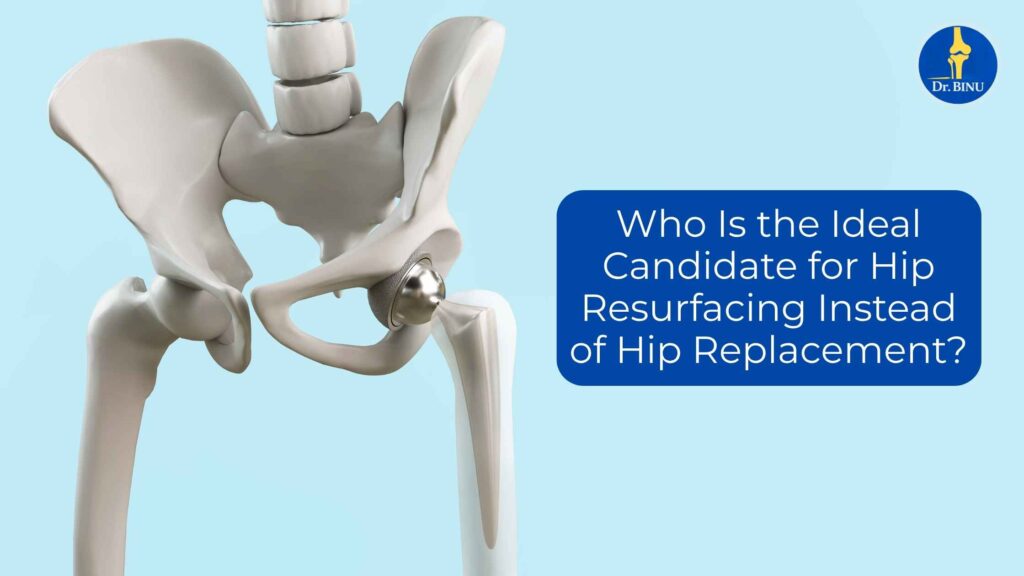
The ideal candidate for hip resurfacing instead of hip replacement is typically a younger, active individual with strong bone quality who wants to maintain a high level of mobility. Unlike traditional hip replacement for severe arthritis, resurfacing preserves more natural bone and allows for greater post-surgical activity.
This advanced procedure is carefully evaluated and performed by experienced orthopaedic specialists like Dr. Binu Sasidharan Neelakantan, a Specialist Orthopaedic Surgeon in Abu Dhabi with over two decades of experience in joint preservation and arthroplasty.
What is hip resurfacing and how is it different?
Hip resurfacing is a bone-preserving surgical procedure where the damaged surfaces of the hip joint are capped with metal components rather than completely replaced. This makes it a highly suitable option among hip surgery options for young patients.
Key differences between hip replacement and resurfacing
- Bone preservation: Hip resurfacing retains more of the patient’s natural bone
- Implant size: Larger femoral head reduces risk of dislocation
- Activity level: Better suited for active lifestyles
- Revision ease: Easier to convert to full replacement later if needed
Understanding the distinction between hip replacement vs resurfacing for younger patients is crucial in making the right surgical decision.
Who are the best hip resurfacing candidates?
The most suitable hip resurfacing candidates are individuals who meet specific clinical and lifestyle criteria. Not everyone with hip pain qualifies for this procedure.
Primary hip resurfacing eligibility criteria
- Age typically below 60 years
- Strong and healthy bone density
- Active lifestyle or athletic demands
- No severe deformity of the hip joint
- Absence of osteoporosis or significant bone loss
These hip resurfacing eligibility criteria ensure that the implant integrates well and performs optimally over time.
What is the ideal age for hip resurfacing surgery?
The ideal age for hip resurfacing surgery generally ranges between 30 and 60 years. Younger patients benefit more because they are more likely to outlive a traditional hip implant and may require revision surgery later.
Dr. Binu Sasidharan carefully evaluates biological age, bone quality, and activity level rather than relying solely on chronological age.
Why is hip resurfacing preferred for young patients?
Hip resurfacing for young patients is often recommended because it preserves bone stock, making future surgeries easier if needed. Younger individuals also tend to place higher demands on their joints.
Advantages for younger individuals
- Better joint stability due to larger implant size
- Higher tolerance for physical activity
- Reduced risk of dislocation
- Preservation of femoral bone
This makes it a preferred choice when comparing hip replacement vs resurfacing for younger patients.
Is hip resurfacing suitable for athletes and active adults?
Yes, hip resurfacing for athletes and highly active individuals is often considered the gold standard when appropriate. It allows for a return to sports and physically demanding activities more effectively than traditional replacement.
Hip resurfacing benefits for active adults
- Improved range of motion
- Greater joint stability during high-impact activities
- Enhanced confidence in movement
- Faster return to active lifestyle
These hip resurfacing benefits for active adults make it an appealing option for individuals unwilling to compromise on their activity levels.
When is hip replacement still the better option?
While resurfacing has many advantages, hip replacement for severe arthritis remains the preferred solution in certain cases.
Situations where hip replacement is recommended
- Severe bone loss or osteoporosis
- Advanced joint deformity
- Older age with lower activity demands
- Certain medical conditions affecting bone quality
Dr. Binu Sasidharan ensures that each patient receives a personalized recommendation based on thorough clinical evaluation.
How does Dr. Binu Sasidharan determine the right treatment?
Dr. Binu Sasidharan follows a comprehensive, evidence-based approach to determine whether a patient is suitable for hip resurfacing or requires alternative treatment.
Evaluation process
- Detailed medical history and lifestyle assessment
- Advanced imaging studies including X-rays and MRI
- Bone density evaluation
- Assessment of activity level and expectations
- Discussion of risks, benefits, and long-term outcomes
This structured approach ensures that only the most appropriate hip resurfacing candidates undergo the procedure.
Comparison table: hip resurfacing vs hip replacement
| Feature | Hip Resurfacing | Hip Replacement |
|---|---|---|
| Bone preservation | High | Low |
| Ideal patients | Younger, active | Older, less active |
| Dislocation risk | Lower | Higher |
| Revision surgery | Easier | More complex |
What are the risks and considerations?
Like any surgical procedure, hip resurfacing carries certain risks. However, when performed by an experienced surgeon like Dr. Binu Sasidharan, complications are minimized.
- Metal ion release (rare with modern implants)
- Femoral neck fracture (uncommon with proper selection)
- Infection or implant loosening
Careful adherence to hip resurfacing eligibility criteria significantly reduces these risks.
Recovery and long-term outcomes
Recovery from hip resurfacing is typically faster for younger, active individuals. Patients often return to normal activities within weeks and resume sports within months.
Long-term outcomes are excellent when the procedure is performed on the right hip resurfacing candidates, particularly those seeking durable solutions among hip surgery options for young patients.
About Dr. Binu Sasidharan
Dr. Binu Sasidharan Neelakantan is a Specialist Orthopaedic Surgeon based in Abu Dhabi, UAE, practicing at NMC Specialty Hospital, Electra. With over 20 years of experience, he specializes in joint replacement, arthroscopy, sports medicine, and trauma care.
His advanced training in arthroplasty and commitment to patient-centered care make him a trusted expert for procedures like hip resurfacing for young patients and complex joint reconstructions.
Dr. Binu combines surgical precision with evidence-based practice, ensuring optimal outcomes for patients seeking alternatives to hip replacement for severe arthritis.
Frequently Asked Questions: Hip Resurfacing vs Hip Replacement
hip resurfacing candidates are typically younger, active individuals who suffer from hip pain due to arthritis or injury but still have strong bone quality. Unlike hip replacement for severe arthritis, this procedure preserves more of the natural bone, making it a preferred option for selected patients. Dr. Binu Sasidharan evaluates multiple factors including bone density, lifestyle, and activity level before recommending this approach.
The ideal age for hip resurfacing surgery is generally between 40 and 60 years, although it may vary depending on individual health and bone quality. Younger patients benefit the most because they tend to have stronger bones and higher activity demands. Dr. Binu Sasidharan carefully assesses whether a patient falls within the ideal age range while also considering long-term outcomes.
hip resurfacing for young patients is often preferred because it conserves bone and allows for a more natural range of motion. When comparing hip replacement vs resurfacing for younger patients, resurfacing offers advantages such as easier revision surgery in the future and improved stability. Dr. Binu Sasidharan helps patients understand both options to make an informed decision.
The hip resurfacing eligibility criteria include good bone quality, absence of severe osteoporosis, and an active lifestyle. Patients should not have significant deformities or advanced bone loss. Dr. Binu Sasidharan conducts thorough imaging and clinical evaluations to determine whether a patient meets these criteria safely.
Yes, hip resurfacing for athletes is particularly beneficial because it allows for greater mobility and durability compared to traditional implants. Many active individuals prefer this option due to the hip resurfacing benefits for active adults, including a lower risk of dislocation and the ability to return to high-impact activities under proper guidance.
hip replacement for severe arthritis is recommended when there is extensive joint damage, poor bone quality, or when a patient does not meet hip resurfacing eligibility criteria. In such cases, total hip replacement provides reliable pain relief and long-term function. Dr. Binu Sasidharan ensures that the chosen treatment aligns with the patient’s condition and expectations.
The hip resurfacing benefits for active adults include preservation of natural bone, improved joint stability, and the ability to maintain an active lifestyle. This makes it an attractive option among hip surgery options for young patients who wish to continue sports or physically demanding activities.
Dr. Binu Sasidharan offers a comprehensive range of hip surgery options for young patients, including advanced hip resurfacing techniques and modern total hip replacement procedures. His approach focuses on personalized care, ensuring that each patient receives the most suitable treatment based on their lifestyle, age, and joint condition.
