
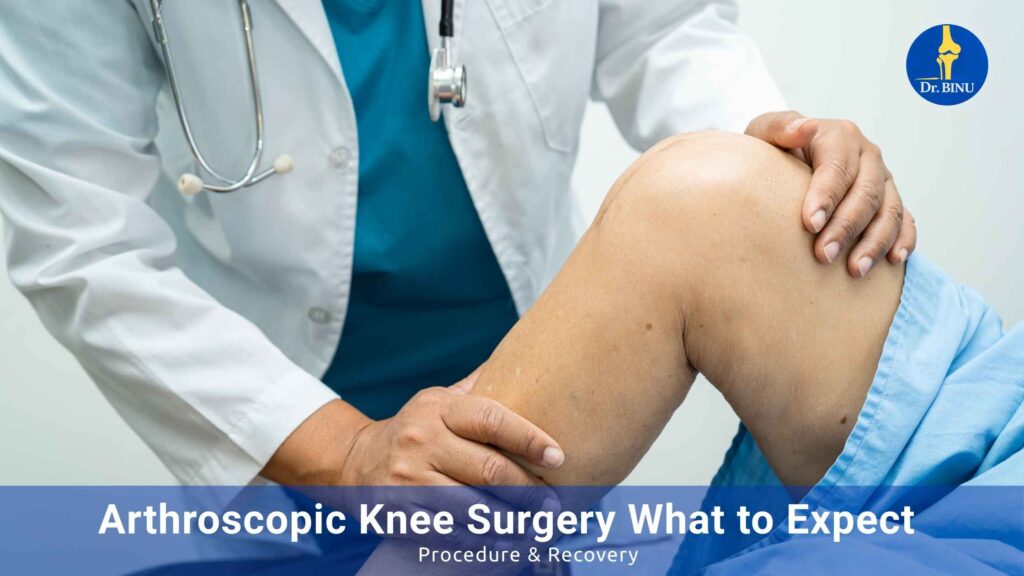
Arthroscopic knee surgery what to expect: Procedure & recovery
Arthroscopic knee surgery what to expect is one of the most common questions patients ask when they are advised minimally invasive knee surgery. Arthroscopy is a modern orthopaedic technique where surgeons examine and treat knee problems using a tiny camera and specialized instruments inserted through small incisions. This minimally invasive method reduces tissue damage, allows faster recovery, and improves surgical precision.
Under the care of Dr. Binu Sasidharan Neelakantan, a highly experienced orthopaedic surgeon in Abu Dhabi with more than two decades of clinical expertise, patients benefit from advanced arthroscopic techniques combined with evidence-based treatment protocols. Practicing at NMC Specialty Hospital, Electra, Abu Dhabi, Dr. Binu specializes in sports injuries, knee arthroscopy, and complex joint procedures designed to restore mobility and improve long-term joint health.
This guide explains the entire process—from diagnosis to recovery—so patients clearly understand what happens before, during, and after arthroscopic knee surgery.
What is arthroscopic knee surgery?
Arthroscopic knee surgery is a minimally invasive surgical procedure that allows orthopaedic surgeons to diagnose and treat knee joint problems using a small camera known as an arthroscope. This advanced approach enables the surgeon to visualize the inside of the knee joint on a monitor while performing repairs with specialized instruments.
The technology behind camera knee surgery has transformed modern orthopaedics. Instead of large incisions used in traditional open surgery, arthroscopy uses small keyhole openings, resulting in:
- Less pain after surgery
- Minimal scarring
- Shorter hospital stays
- Faster rehabilitation
- Lower risk of complications
Because the procedure uses a camera in knee operation, surgeons can examine joint structures with exceptional accuracy, helping them diagnose injuries affecting cartilage, ligaments, or the meniscus.
Why is arthroscopic knee surgery performed?
Doctors recommend knee arthroscopy when imaging tests and clinical examination suggest structural problems inside the knee joint that require surgical treatment.
Conditions commonly treated through knee surgery with camera include:
- Meniscus tears
- ACL or ligament injuries
- Loose bone or cartilage fragments
- Inflammation of joint lining
- Cartilage damage
- Knee instability after sports injuries
- Persistent knee pain not responding to conservative treatment
In some cases, surgeons may first perform diagnostic arthroscopic knee surgery to closely inspect the joint and confirm the cause of symptoms. This is also known as diagnostic scope of the knee, where the camera helps identify damage that may not be visible through MRI or X-ray imaging.
How does the arthroscopic knee surgery procedure work?
The arthroscopic knee surgery procedure involves inserting a tiny camera and surgical instruments into the knee joint through small incisions. The procedure typically takes between 30 minutes and one hour depending on the condition being treated.
Step-by-step procedure for arthroscopic knee surgery
- Anaesthesia administration – The patient receives regional or general anaesthesia to ensure comfort during surgery.
- Small incision creation – The surgeon makes two or three tiny incisions around the knee.
- Insertion of arthroscope – A small camera is inserted into the joint to provide a clear internal view.
- Joint inspection – The surgeon examines cartilage, ligaments, and joint structures.
- Repair or treatment – Specialized tools are used to trim damaged tissue or repair injuries.
- Fluid irrigation – Sterile fluid keeps the joint clean and visible.
- Closing the incisions – Small sutures or surgical strips close the tiny incisions.
The procedure for arthroscopic knee surgery allows surgeons to diagnose and treat several conditions during the same operation, which reduces the need for additional surgeries.
What happens during a camera in knee procedure?
A camera in knee procedure involves the use of an arthroscope—a thin tube equipped with a camera and light source—to capture real-time images of the knee joint. These images are displayed on a monitor, allowing the surgeon to guide instruments with extreme precision.
During scope in knee surgery, surgeons can examine important structures such as:
- Meniscus cartilage
- Anterior cruciate ligament (ACL)
- Posterior cruciate ligament (PCL)
- Articular cartilage surfaces
- Joint lining (synovium)
Because the scope for knee surgery magnifies internal structures, surgeons can detect even small injuries and treat them immediately.
How should patients prepare for arthroscopic knee surgery?
Preparation plays an important role in achieving successful surgical outcomes. Before undergoing camera knee surgery, patients usually undergo a detailed evaluation that may include:
- Medical history review
- Physical examination
- Imaging tests such as MRI or X-ray
- Blood tests
- Medication review
Patients may also receive guidance regarding:
- Temporary discontinuation of certain medications
- Fasting before surgery
- Arranging transportation after the procedure
- Preparing home support during recovery
Under the supervision of Dr. Binu Sasidharan, each patient receives individualized preparation instructions tailored to their condition and overall health.
What to expect immediately after surgery?
After the surgery, patients are monitored in a recovery area until the anaesthesia effects wear off. Most individuals return home the same day since arthroscopy is usually performed as an outpatient procedure.
Common experiences after knee surgery with camera include:
- Mild swelling around the knee
- Temporary stiffness
- Minor discomfort
- Bandages covering small incision sites
Doctors typically recommend rest, ice application, compression, and elevation to minimize swelling.
Recovery timeline after arthroscopic knee surgery
Recovery varies depending on the injury treated and the patient’s overall health. However, arthroscopic procedures generally allow faster rehabilitation compared with open surgery.
| Recovery phase | Typical timeframe | Key activities |
|---|---|---|
| Immediate recovery | 1–3 days | Pain control, rest, swelling reduction |
| Early rehabilitation | 1–2 weeks | Gentle movement and walking with support |
| Strength building | 3–6 weeks | Physical therapy exercises |
| Return to sports | 6–12 weeks | Gradual return to normal activities |
Physical therapy plays an essential role in restoring strength and mobility. Following the rehabilitation plan recommended by the surgeon helps ensure optimal results.
Benefits of minimally invasive knee arthroscopy
The popularity of arthroscopic knee surgery procedure continues to grow because of its numerous advantages over traditional surgery.
- Minimal surgical trauma
- Smaller incisions
- Reduced postoperative pain
- Lower infection risk
- Shorter hospital stays
- Faster recovery
- Improved surgical visualization
Advanced arthroscopic techniques allow surgeons like Dr. Binu Sasidharan to treat sports injuries and joint conditions with high precision and improved patient outcomes.
Who is a candidate for arthroscopic knee surgery?
Patients who may benefit from arthroscopy include:
- Athletes with ligament injuries
- Individuals with persistent knee pain
- Patients with cartilage or meniscus tears
- Those with loose fragments inside the joint
- People experiencing limited knee movement
An experienced orthopaedic surgeon evaluates each patient carefully before recommending surgery.
About Dr. Binu Sasidharan
Dr. Binu Sasidharan Neelakantan is a Specialist Orthopaedic Surgeon practicing in Abu Dhabi, UAE. With over twenty years of experience in orthopaedics, joint replacement, sports medicine, and trauma surgery, he provides advanced musculoskeletal care using modern surgical techniques.
His areas of expertise include:
- Knee arthroscopy
- ACL reconstruction
- Joint replacement surgery
- Sports injury treatment
- Fracture fixation and trauma surgery
- Degenerative joint disorder management
Dr. Binu is known for combining surgical expertise with patient-centered care. His international training and fellowships in arthroplasty and arthroscopy enable him to deliver safe and effective treatment for a wide range of orthopaedic conditions.
Conclusion
Understanding arthroscopic knee surgery what to expect helps patients approach the procedure with confidence. Arthroscopy offers a highly effective, minimally invasive solution for diagnosing and treating knee injuries while allowing faster recovery and improved mobility.
With the expertise of Dr. Binu Sasidharan in advanced knee arthroscopy and sports medicine, patients in Abu Dhabi can receive comprehensive orthopaedic care focused on restoring joint function and improving quality of life.
Frequently Asked Questions
When researching arthroscopic knee surgery what to expect, patients should know that this is a minimally invasive orthopedic procedure used to diagnose and treat various knee joint problems. Instead of a large incision, the surgeon makes a few very small openings around the knee and inserts specialized instruments along with a tiny camera.
During knee surgery with camera, the surgeon can clearly see the inside of the knee on a monitor, allowing precise treatment of conditions such as ligament injuries, cartilage damage, meniscus tears, or inflammation. With the expertise of Dr. Binu Sasidharan, patients benefit from accurate diagnosis, minimally invasive treatment, and faster recovery compared with traditional open knee surgery.
The arthroscopic knee surgery procedure involves inserting a small medical camera through a tiny incision in the knee joint. This camera sends real-time images to a monitor so the surgeon can evaluate the internal structures of the knee without making a large surgical opening.
Because the camera in knee procedure provides a magnified view, the surgeon can identify issues such as torn cartilage, ligament damage, or joint inflammation. Using miniature instruments inserted through additional small incisions, the surgeon performs the necessary treatment while protecting surrounding tissues. This approach leads to less pain, smaller scars, and quicker rehabilitation.
The procedure for arthroscopic knee surgery usually begins with either regional or general anesthesia. After preparing the knee area, the surgeon makes a few small incisions called portals. Through one portal, a tiny camera is inserted to guide the procedure.
This camera knee surgery technique allows the surgeon to visualize structures such as ligaments, cartilage, and joint surfaces. Additional surgical tools are then inserted through other portals to repair or remove damaged tissue. Because the procedure relies on advanced visualization and precise instruments, it is considered one of the safest and most effective modern knee treatments.
A camera in knee operation refers to arthroscopy, a technique in which a miniature camera called an arthroscope is inserted into the knee joint. The camera provides a clear, magnified image of the joint structures on a video screen, helping surgeons perform accurate diagnosis and treatment.
Many patients also refer to this as camera in knee procedure or knee surgery with camera because the technology allows the surgeon to work inside the joint with minimal disruption to surrounding tissues. This method significantly reduces surgical trauma and typically shortens recovery time.
Camera knee surgery is generally considered safer and less invasive than traditional open procedures. Because the surgeon works through small incisions while viewing the joint on a monitor, there is less tissue damage and a lower risk of complications.
Patients undergoing scope in knee surgery usually experience reduced postoperative pain, minimal scarring, and a quicker return to daily activities. Under the care of experienced orthopedic specialists like Dr. Binu Sasidharan, patients receive personalized treatment plans designed to optimize both surgical outcomes and recovery.
The scope in knee surgery refers to the arthroscope, a specialized instrument that contains a fiber-optic camera and light source. It allows surgeons to view the interior of the knee joint in high detail without making a large incision.
Using a scope for knee surgery provides several advantages. Surgeons can diagnose problems accurately, perform repairs with precision, and reduce trauma to surrounding tissues. This technology is especially helpful when treating sports injuries, cartilage problems, and ligament damage.
Diagnostic arthroscopic knee surgery is performed when imaging tests such as X-rays or MRI scans do not fully explain a patient’s knee symptoms. By inserting a small camera into the joint, the surgeon can directly inspect the knee structures to identify hidden problems.
This approach is often recommended for persistent knee pain, unexplained swelling, locking of the joint, or suspected cartilage injuries. Because the procedure is minimally invasive, it can provide both diagnosis and treatment in the same session if a correctable problem is discovered.
The diagnostic scope of the knee allows surgeons to carefully evaluate structures such as the meniscus, cartilage surfaces, ligaments, and joint lining. It helps identify tears, inflammation, loose fragments of bone or cartilage, and early degenerative changes.
By performing a diagnostic scope of the knee, orthopedic specialists like Dr. Binu Sasidharan can determine the exact cause of knee pain and recommend the most effective treatment strategy. In many cases, the surgeon can immediately correct the issue during the same procedure, reducing the need for multiple surgeries.
