
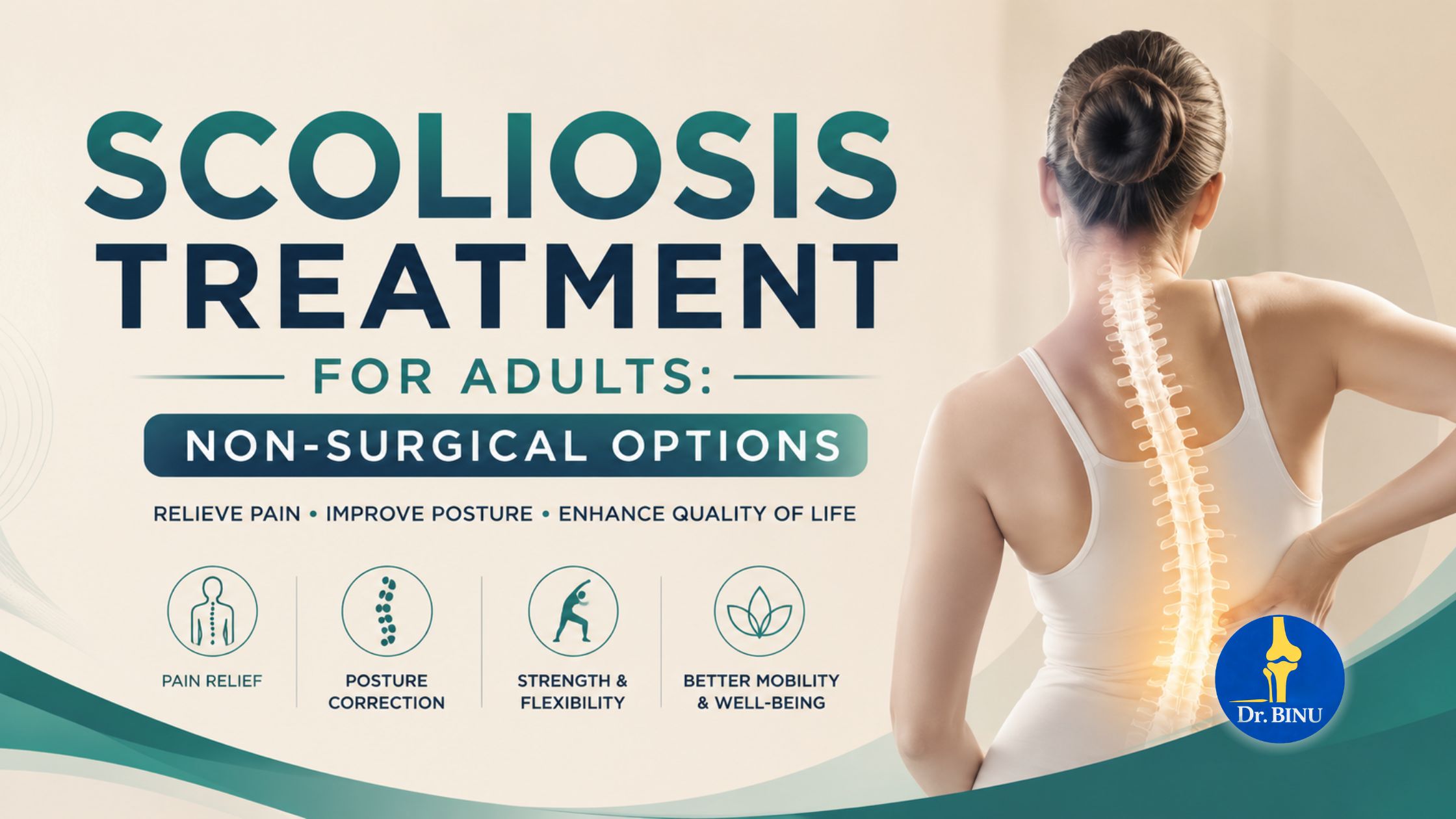
Adult scoliosis can often be managed successfully without surgery through targeted rehabilitation, pain management, posture correction, and specialized physiotherapy techniques. Many patients with spinal curvature experience significant improvement in pain, mobility, posture, and daily function when treated early with personalized non-invasive care.
Dr. Binu Sasidharan Neelakantan, Specialist Orthopaedic Surgeon at NMC Specialty Hospital, Electra, Abu Dhabi, provides evidence-based care for patients seeking advanced non-operative solutions for scoliosis and chronic spinal conditions. With more than 20 years of orthopaedic experience and international training in musculoskeletal care, Dr. Binu focuses on restoring mobility, reducing discomfort, and improving long-term spinal health through individualized treatment planning.
What is adult scoliosis?
Adult scoliosis refers to an abnormal sideways curvature of the spine that develops or progresses after skeletal maturity. Unlike adolescent scoliosis, adult cases are often associated with degeneration, arthritis, disc problems, muscle imbalance, or previous untreated spinal deformities.
The condition may affect posture, walking ability, balance, and quality of life. In many adults, the curve slowly worsens over time due to degenerative spinal changes. Early diagnosis and conservative treatment can help slow progression and reduce symptoms.
| Condition | Description | Common Symptoms |
|---|---|---|
| Degenerative scoliosis | Develops due to spinal wear and tear | Back pain, stiffness, imbalance |
| Idiopathic adult scoliosis | Progression of childhood scoliosis into adulthood | Uneven shoulders, chronic discomfort |
| Neuromuscular scoliosis | Associated with neurological disorders | Mobility difficulties, weakness |
What are the symptoms of scoliosis in adults?
Symptoms vary depending on curve severity, spinal degeneration, and nerve involvement. Some adults experience only mild discomfort, while others develop chronic pain and mobility limitations.
Common symptoms include:
- Persistent lower back or upper back pain
- Visible spinal curvature
- Uneven hips or shoulders
- Muscle fatigue after standing
- Numbness or tingling in the legs
- Reduced flexibility
- Difficulty walking long distances
- Postural imbalance
Many patients seeking Scoliosis treatment Abu Dhabi initially present with chronic back pain that gradually worsens during daily activities or prolonged sitting.
What causes scoliosis in adults?
Adult scoliosis can develop due to multiple underlying factors. Degenerative spinal changes are among the most common causes in older adults.
Primary causes include:
- Degenerative disc disease
- Osteoarthritis of the spine
- Untreated childhood scoliosis
- Spinal fractures
- Muscle weakness and imbalance
- Osteoporosis
- Previous spinal surgeries
- Neurological conditions
Dr. Binu Sasidharan carefully evaluates spinal alignment, nerve involvement, posture mechanics, and musculoskeletal function before recommending a personalized treatment strategy.
How is adult scoliosis diagnosed?
Diagnosis involves a comprehensive orthopaedic examination combined with imaging studies to determine curve severity, spinal balance, and associated degeneration.
Diagnostic evaluation may include:
- Detailed medical history
- Physical examination
- Posture analysis
- Neurological assessment
- X-rays for Cobb angle measurement
- MRI scans if nerve compression is suspected
- Functional mobility evaluation
Accurate diagnosis is essential because adult scoliosis often overlaps with arthritis, spondylosis, and degenerative spinal conditions.
Can scoliosis in adults be treated without surgery?
Yes, many adults with scoliosis can achieve significant symptom relief without surgery. Non-surgical management focuses on pain reduction, posture correction, muscle strengthening, mobility restoration, and preventing further curve progression.
Not every patient requires surgery. Conservative treatment is often highly effective for mild to moderate curves and for patients whose primary symptoms involve pain, stiffness, or muscular imbalance rather than severe neurological compromise.
Dr. Binu Sasidharan adopts a patient-centered approach that combines advanced orthopaedic evaluation with modern rehabilitation strategies to improve long-term spinal function.
What are the best non-surgical scoliosis treatments for adults?
The best non-operative treatment depends on the patient’s age, spinal curve severity, symptoms, and lifestyle goals. A multidisciplinary treatment plan often delivers the most effective results.
1. Physiotherapy and rehabilitation
Specialized physiotherapy plays a critical role in scoliosis management. Rehabilitation programs focus on strengthening weak muscles, improving flexibility, and correcting posture abnormalities.
Structured posture rehab programs can help reduce muscle strain and improve spinal alignment awareness during daily activities.
Benefits of rehabilitation include:
- Improved posture
- Better spinal support
- Reduced pain
- Enhanced flexibility
- Core strengthening
- Improved balance
2. scoliosis exercises
Targeted scoliosis exercises are designed to improve spinal stability, breathing mechanics, muscular symmetry, and postural control. These exercises are customized based on the patient’s curve pattern and functional limitations.
Regular exercise therapy may help reduce stiffness and improve quality of life when performed consistently under professional supervision.
3. Schroth method
The Schroth method is a specialized physiotherapy approach used worldwide for scoliosis rehabilitation. It utilizes rotational breathing techniques, posture correction, and individualized exercises to address spinal asymmetry.
The method aims to:
- Improve spinal alignment
- Enhance breathing function
- Reduce muscular imbalance
- Improve body awareness
- Minimize curve progression
Many adults with chronic spinal discomfort benefit from integrating the Schroth method into their long-term rehabilitation plan.
4. adult bracing
Although bracing is commonly associated with adolescents, adult bracing can also help selected patients. Modern braces are designed to provide spinal support, improve posture, and reduce mechanical stress during activities.
Bracing may be recommended for:
- Progressive curves
- Pain management
- Postural support
- Degenerative scoliosis
- Functional stability
Dr. Binu evaluates whether bracing is appropriate based on individual spinal mechanics and clinical findings.
5. Pain management and injections
Pain management strategies may include medications, activity modification, guided physiotherapy, and image-guided injections for inflammation control.
In selected cases, minimally invasive spinal injections can help relieve nerve irritation and improve function without major surgery.
How does posture affect adult scoliosis?
Poor posture can worsen muscular imbalance and increase mechanical stress on the spine. Correcting posture helps distribute spinal load more evenly and may reduce chronic pain.
Patients with spinal curvature often unknowingly compensate through altered walking patterns, shoulder elevation, or pelvic tilting. Over time, these compensatory mechanisms contribute to fatigue and discomfort.
Comprehensive posture rehab programs focus on:
- Core stabilization
- Spinal alignment training
- Breathing mechanics
- Movement correction
- Ergonomic education
- Muscular endurance
When is surgery considered for adult scoliosis?
Surgery is generally reserved for severe cases where conservative treatment fails or when there is significant nerve compression, progressive deformity, or disabling pain.
Possible surgical indications include:
- Severe progressive spinal curvature
- Neurological symptoms
- Difficulty walking
- Loss of bladder or bowel control
- Failure of non-surgical treatment
- Severe spinal imbalance
Dr. Binu Sasidharan prioritizes conservative management whenever clinically appropriate and carefully discusses all treatment options with patients before considering surgery.
How long does non-surgical scoliosis treatment take?
The duration varies depending on curve severity, patient compliance, muscle conditioning, and overall spinal health. Many patients begin noticing improvements within several weeks of starting rehabilitation, although long-term maintenance is important.
Consistent therapy and lifestyle modifications typically produce the best outcomes. Long-term spinal health requires ongoing strengthening, posture awareness, and regular follow-up evaluations.
What lifestyle changes help adults with scoliosis?
Lifestyle modifications can significantly improve comfort and spinal function. Small daily adjustments often reduce mechanical stress on the spine.
Helpful strategies include:
- Maintaining healthy body weight
- Regular stretching and strengthening
- Using ergonomic workstations
- Avoiding prolonged sitting
- Practicing good posture
- Engaging in low-impact exercise
- Improving sleep posture
- Following rehabilitation programs consistently
Why choose Dr. Binu Sasidharan for scoliosis care in Abu Dhabi?
Dr. Binu Sasidharan Neelakantan is a Specialist Orthopaedic Surgeon in Abu Dhabi with more than 20 years of clinical expertise in orthopaedics, spinal conditions, sports medicine, trauma care, and joint reconstruction.
His patient-focused approach combines advanced orthopaedic evaluation, evidence-based rehabilitation strategies, minimally invasive treatment techniques, and personalized recovery planning.
Patients choose Dr. Binu because of:
- Extensive orthopaedic experience
- International fellowship training
- Comprehensive musculoskeletal expertise
- Commitment to patient safety
- Evidence-based treatment planning
- Personalized rehabilitation programs
- Multilingual communication abilities
At NMC Specialty Hospital, Electra, Abu Dhabi, Dr. Binu provides comprehensive evaluation and treatment for adults seeking effective non-operative scoliosis care.
About Dr. Binu Sasidharan
Dr. Binu Sasidharan Neelakantan is a trusted orthopaedic specialist in Abu Dhabi known for his expertise in joint replacement, sports medicine, trauma surgery, arthroscopy, and advanced musculoskeletal rehabilitation. His qualifications include MBBS, Diploma in Orthopaedics, MS Orthopaedics, ISAKOS-approved fellowship training, MBA in Healthcare, MSc from the Royal College of Surgeons Ireland, and multiple certifications in healthcare quality and patient safety.
His treatment philosophy emphasizes accurate diagnosis, minimally invasive care when appropriate, transparent communication, and long-term functional recovery for every patient.
Conclusion
Adult scoliosis can affect posture, mobility, confidence, and daily quality of life, but many patients improve substantially through non-surgical care. Modern rehabilitation strategies including scoliosis exercises, posture correction, specialized physiotherapy, adult bracing, and advanced pain management can help patients regain function and reduce discomfort.
With extensive orthopaedic expertise and a patient-centered treatment philosophy, Dr. Binu Sasidharan provides comprehensive scoliosis care tailored to the unique needs of adults seeking long-term spinal health and mobility in Abu Dhabi.
Frequently Asked Questions
What are the most effective non-surgical options for adult scoliosis?
Adults with scoliosis often benefit from a combination of physiotherapy, targeted rehabilitation, pain management strategies, and guided exercise programs. At Dr. Binu Sasidharan’s clinic, treatment plans are personalized according to the degree of spinal curvature, mobility limitations, muscle imbalance, and daily activity levels.
Non-surgical care may include scoliosis exercises, posture correction training, core stabilization, flexibility work, and movement therapy designed to reduce discomfort and improve functional strength. The goal is not only to manage symptoms, but also to help patients regain confidence in everyday activities without immediately considering surgery.
When should an adult seek professional evaluation for scoliosis?
Adults should seek evaluation if they notice persistent back pain, uneven shoulders or hips, reduced flexibility, posture changes, or worsening fatigue while standing or walking. Even mild scoliosis can progress over time if left unaddressed, especially when combined with degenerative spine conditions.
Dr. Binu Sasidharan provides detailed assessments for Scoliosis treatment Abu Dhabi patients who want to understand the cause of their symptoms and explore conservative treatment solutions before considering invasive procedures.
Can exercise really help adults living with scoliosis?
Yes. Structured exercise programs can play an important role in improving posture, muscular balance, breathing mechanics, and spinal support. Carefully supervised scoliosis exercises may also reduce stiffness and help patients move more comfortably throughout the day.
The key is using exercises that are specific to the individual’s curve pattern and physical condition. Generic workouts may not adequately address asymmetry or muscular compensation. Dr. Binu Sasidharan develops customized rehabilitation programs that focus on safe progression and long-term spinal support.
What is the Schroth method and how does it help scoliosis patients?
The Schroth method is a specialized physiotherapy approach designed specifically for scoliosis management. It uses targeted breathing techniques, posture awareness, and corrective exercises to address the three-dimensional nature of scoliosis.
Many adults find the Schroth method beneficial because it encourages improved alignment, muscular symmetry, and body awareness without surgery. Dr. Binu Sasidharan may incorporate Schroth-inspired principles as part of a broader rehabilitation strategy depending on the patient’s curve pattern, symptoms, and treatment goals.
Is adult bracing still useful after skeletal maturity?
Although bracing is commonly associated with adolescents, adult bracing can still provide benefits in selected cases. Adults may use braces to improve spinal support, reduce muscular strain, enhance posture control, or manage pain during prolonged standing and movement.
Bracing is typically combined with rehabilitation rather than used as a standalone solution. Dr. Binu Sasidharan evaluates whether bracing is appropriate based on spinal flexibility, symptom severity, activity demands, and overall treatment objectives.
How does posture rehab support long-term scoliosis management?
posture rehab focuses on improving alignment habits, muscular endurance, movement efficiency, and body mechanics during daily activities. Adults with scoliosis often develop compensatory movement patterns that place extra stress on the spine and surrounding muscles.
Through guided rehabilitation, patients learn how to sit, stand, walk, lift, and move with improved spinal support. Dr. Binu Sasidharan emphasizes sustainable posture correction strategies that patients can continue practicing at home and at work for long-term relief and improved mobility.
Can non-surgical scoliosis treatment reduce pain and improve daily function?
In many cases, yes. While non-surgical treatment may not completely reverse every spinal curve, it can significantly improve comfort, balance, flexibility, and physical function. Many adults experience reduced muscle tension, better endurance, and improved quality of life after following a structured rehabilitation plan.
Dr. Binu Sasidharan’s approach focuses on identifying the root causes contributing to discomfort and designing realistic treatment pathways that fit each patient’s lifestyle, work routine, and physical goals.
What can patients expect during their first scoliosis consultation?
The first consultation usually includes a detailed medical history review, posture assessment, movement analysis, and discussion of symptoms such as pain, stiffness, fatigue, or balance concerns. Previous scans or imaging may also be reviewed to better understand curve progression and spinal health.
Based on the findings, Dr. Binu Sasidharan creates a personalized care plan that may include physiotherapy, corrective exercise strategies, rehabilitation guidance, and ongoing monitoring to help patients manage scoliosis more effectively without surgery whenever possible.
