
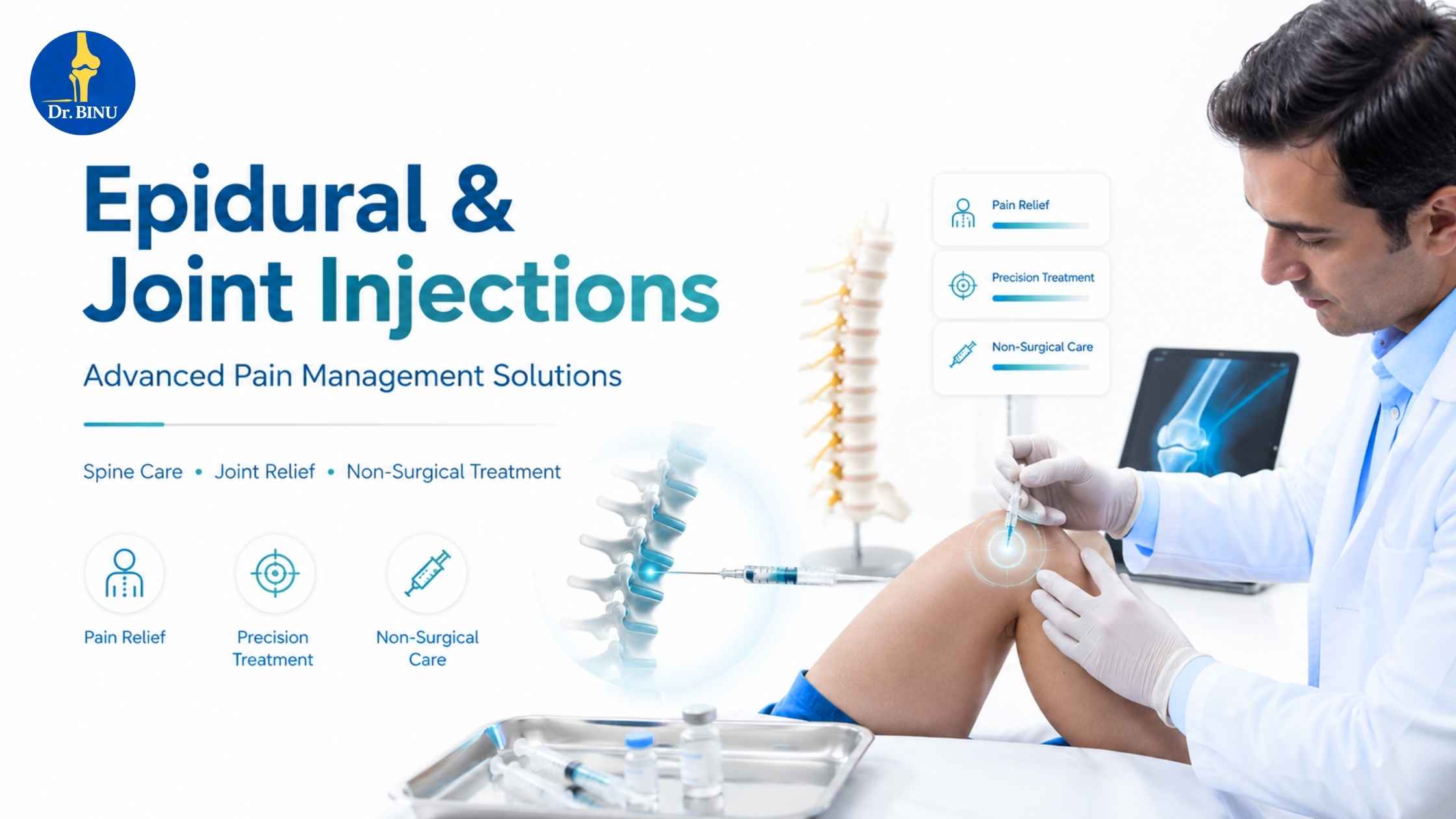
Epidural and joint injections are minimally invasive treatments used to reduce inflammation, relieve chronic pain, and improve mobility without major surgery. These advanced procedures are commonly recommended for patients suffering from arthritis, back pain, spinal disorders, sports injuries, and degenerative joint conditions. Under the expert care of Dr. Binu Sasidharan, patients in Abu Dhabi receive evidence-based orthopaedic care focused on restoring comfort, mobility, and quality of life.
For individuals struggling with persistent musculoskeletal pain, conservative treatment methods may not always provide adequate relief. In such cases, Pain management injections Abu Dhabi have become an effective option for reducing pain while allowing patients to continue rehabilitation and daily activities with improved function.
What are epidural and joint injections?
Epidural and joint injections are targeted pain-relief procedures that deliver medication directly into the affected area. These treatments are designed to reduce inflammation around irritated nerves, joints, muscles, or spinal structures. Because the medication is delivered precisely where the pain originates, patients often experience faster and more effective relief compared to oral medication alone.
These procedures may include:
- Epidural steroid injections for spinal nerve irritation
- Joint injections for arthritis and inflammation
- cortisone shots for painful joints and soft tissues
- facet block injections for chronic neck and lower back pain
- spinal injections for nerve compression and disc-related pain
Dr. Binu Sasidharan carefully evaluates each patient before recommending any interventional pain management procedure. His approach focuses on accurate diagnosis, individualized treatment planning, and minimally invasive orthopaedic care.
Who may benefit from epidural and joint injections?
Patients with chronic pain conditions that interfere with movement, sleep, work, or physical activity may benefit from these procedures. In many cases, injections can help delay or even avoid surgery while improving function and participation in physiotherapy.
Common conditions treated with injections
- Osteoarthritis
- Rheumatoid arthritis
- Sciatica
- Herniated disc
- Cervical spondylosis
- Lumbar spondylosis
- Frozen shoulder
- Tennis elbow
- Knee pain
- Hip pain
- Shoulder inflammation
- Sports injuries
- Nerve root irritation
- Chronic lower back pain
Patients visiting a specialized chronic pain clinic often seek non-surgical methods that provide long-term relief while maintaining mobility and independence. Dr. Binu’s expertise in orthopaedics and sports medicine allows him to combine advanced injections with rehabilitation strategies tailored to each patient’s lifestyle.
How do epidural steroid injections work?
Epidural injections work by delivering anti-inflammatory medication into the epidural space around spinal nerves. This helps reduce swelling, irritation, and nerve compression that commonly cause radiating pain into the arms or legs.
The procedure is commonly recommended for:
- Sciatica
- Disc prolapse
- Spinal stenosis
- Degenerative disc disease
- Persistent lower back pain
- Neck pain associated with nerve irritation
Many patients experience reduced pain within days after treatment, allowing them to participate more effectively in physiotherapy and strengthening programs.
Benefits of epidural injections
| Benefit | Description |
|---|---|
| Minimally invasive | No major surgery or long hospitalization required |
| Targeted pain relief | Medication reaches the exact source of inflammation |
| Improved mobility | Patients can move more comfortably after treatment |
| Supports rehabilitation | Helps patients continue physiotherapy programs |
| Reduced medication dependence | May decrease the need for prolonged oral painkillers |
What are joint injections used for?
Joint injections are used to reduce inflammation and pain inside affected joints. These procedures are especially useful for patients with arthritis, sports injuries, and degenerative joint conditions.
Joint injections may be administered into:
- Knee joints
- Shoulder joints
- Hip joints
- Ankle joints
- Elbow joints
- Small joints of the hand
In many cases, cortisone shots are used because corticosteroids provide powerful anti-inflammatory effects. Dr. Binu Sasidharan carefully determines whether steroid injections are appropriate based on the patient’s age, activity level, imaging findings, and long-term treatment goals.
What is a facet block and when is it recommended?
A facet block is a specialized injection used to diagnose and treat pain arising from the small joints of the spine. These joints can become inflamed due to arthritis, repetitive strain, injury, or degenerative changes.
A facet block may be recommended when patients experience:
- Chronic neck pain
- Persistent lower back pain
- Stiffness while bending or twisting
- Pain that worsens after standing for long periods
- Localized spinal tenderness
These injections are performed with precision to ensure accurate placement and maximum therapeutic benefit. By identifying the source of pain, facet injections can also help guide further treatment planning.
How safe are spinal injections?
When performed by an experienced orthopaedic specialist, spinal injections are generally considered safe and effective. Advanced imaging guidance and sterile techniques help minimize risks while improving accuracy.
Dr. Binu Sasidharan follows strict clinical safety protocols aligned with international healthcare standards. His additional certifications in healthcare quality, patient safety, and risk management strengthen the overall safety-focused approach provided to every patient.
Potential temporary side effects may include:
- Mild soreness at the injection site
- Temporary numbness
- Short-term increase in pain
- Facial flushing
- Temporary elevation in blood sugar levels
Patients receive comprehensive evaluation and post-procedure guidance to ensure optimal recovery and long-term outcomes.
Can regenerative medicine improve joint pain?
regenerative medicine focuses on supporting the body’s natural healing processes to improve tissue recovery and pain management. In orthopaedics, regenerative approaches are increasingly used alongside conventional treatments for tendon injuries, cartilage damage, and early degenerative joint disease.
Depending on the condition, regenerative approaches may complement:
- Physiotherapy
- Activity modification
- Sports rehabilitation
- Joint preservation strategies
- Non-surgical pain management plans
Dr. Binu Sasidharan evaluates whether regenerative techniques are appropriate for each patient after detailed clinical examination and imaging assessment.
Why choose Dr. Binu Sasidharan for advanced pain management?
Dr. Binu Sasidharan Neelakantan is a highly experienced Specialist Orthopaedic Surgeon practicing at NMC Specialty Hospital, Electra, Abu Dhabi. With more than 20 years of clinical expertise, he provides advanced musculoskeletal care using both surgical and non-surgical treatment methods.
His expertise includes:
- Joint replacement surgery
- Sports injury management
- Knee arthroscopy
- Trauma care
- Advanced orthopaedic injections
- Degenerative spine management
- Minimally invasive orthopaedic procedures
Patients choose Dr. Binu because of his:
- Evidence-based treatment approach
- Strong focus on patient safety
- International fellowship training
- Experience managing complex orthopaedic conditions
- Personalized rehabilitation planning
- Commitment to long-term mobility and joint health
What should patients expect during the procedure?
Most injection procedures are completed within a short outpatient visit. Patients are typically able to return home the same day with minimal downtime.
Typical process for injection procedures
- Clinical evaluation and diagnosis
- Imaging review and treatment planning
- Preparation of the injection site
- Image-guided injection procedure
- Short observation period
- Post-procedure recovery instructions
Many patients notice improvement within a few days, although the response may vary depending on the severity of the condition and the type of injection used.
How do injections support long-term orthopaedic recovery?
Advanced injection therapies are often part of a broader rehabilitation strategy rather than a standalone treatment. Pain relief allows patients to actively participate in strengthening exercises, posture correction, mobility training, and physiotherapy programs.
Long-term recovery plans may include:
- Weight management
- Exercise modification
- Core strengthening
- Sports rehabilitation
- Physiotherapy
- Joint protection techniques
- Lifestyle optimization
By addressing both pain and functional recovery, patients may achieve better mobility, improved quality of life, and reduced risk of future complications.
About Dr. Binu Sasidharan
Dr. Binu Sasidharan Neelakantan is a Specialist Orthopaedic Surgeon in Abu Dhabi specializing in joint replacement, arthroscopy, sports medicine, trauma surgery, and advanced non-surgical orthopaedic care. Practicing at NMC Specialty Hospital, Electra, Abu Dhabi, he combines over two decades of orthopaedic expertise with internationally recognized standards in healthcare quality and patient safety.
His qualifications include MBBS, Diploma in Orthopaedics, MS Orthopaedics, ISAKOS-approved fellowship training in arthroplasty, fellowship in knee arthroscopy, MBA in Healthcare, MSc from the Royal College of Surgeons Ireland, and multiple healthcare quality certifications.
Dr. Binu communicates fluently in English, Hindi, Malayalam, and Tamil, enabling him to provide patient-focused care to a diverse population across the UAE.
Conclusion
Epidural and joint injections play a significant role in modern orthopaedic care by helping patients manage pain, improve mobility, and avoid unnecessary surgery. Whether treating arthritis, sports injuries, spinal disorders, or chronic back pain, these minimally invasive procedures can support faster recovery and better long-term function.
Under the care of Dr. Binu Sasidharan, patients in Abu Dhabi receive comprehensive orthopaedic evaluation, individualized treatment planning, and advanced interventional pain management designed to restore movement and improve overall quality of life.
Frequently Asked Questions
What are epidural injections and how do they help with pain relief?
Epidural injections are targeted treatments used to reduce inflammation and relieve pain around irritated spinal nerves. They are commonly recommended for patients experiencing back pain, neck pain, sciatica, slipped discs, or nerve compression. By delivering medication directly into the affected area, these treatments can reduce swelling and improve mobility more effectively than oral medication alone.
Dr. Binu Sasidharan carefully evaluates each patient before recommending spinal injections, ensuring that the procedure is suited to the patient’s symptoms, imaging findings, and overall health goals. Many patients experience significant improvement in pain levels, allowing them to return to normal activities and physiotherapy with greater comfort.
Who may benefit from Pain management injections Abu Dhabi?
Pain management injections Abu Dhabi may benefit individuals dealing with chronic neck pain, lower back pain, arthritis, joint inflammation, sports injuries, nerve irritation, or post-surgical discomfort. These injections are often considered when conservative methods such as medications, rest, and physical therapy have not provided adequate relief.
At Dr. Binu Sasidharan’s chronic pain clinic, every treatment plan is personalized. The focus is not only on temporary pain reduction but also on restoring long-term movement, function, and quality of life through evidence-based interventional pain management techniques.
Are cortisone shots safe for joint and spine pain?
cortisone shots are widely used to reduce inflammation in painful joints and spinal structures. When performed by an experienced specialist using proper imaging guidance and sterile techniques, these injections are generally considered safe and effective for many patients.
Dr. Binu Sasidharan uses a thorough assessment process to determine whether cortisone-based treatment is appropriate. Factors such as medical history, current medications, diabetes status, and the severity of inflammation are all considered before proceeding. Patients are also guided regarding recovery expectations, activity modifications, and follow-up care after the procedure.
What is a facet block and when is it recommended?
A facet block is a minimally invasive injection procedure used to diagnose and treat pain originating from the small facet joints in the spine. These joints can become inflamed because of aging, arthritis, injury, or repetitive strain, leading to stiffness and persistent discomfort in the neck or lower back.
Dr. Binu Sasidharan may recommend a facet block for patients who experience localized spinal pain that worsens with twisting, bending, or prolonged standing. The procedure can help confirm the source of pain while also providing therapeutic relief. In some cases, it may be combined with other advanced pain management approaches for longer-lasting results.
How long do spinal injections usually last?
The duration of relief from spinal injections can vary depending on the patient’s condition, the severity of inflammation, and the type of injection used. Some patients experience relief for several weeks, while others may benefit for several months after treatment.
Dr. Binu Sasidharan combines interventional procedures with rehabilitation strategies, posture correction, and movement therapy whenever appropriate. This comprehensive approach helps maximize the benefits of treatment and supports better long-term outcomes for patients managing chronic spinal pain.
Can regenerative medicine help with chronic joint or tendon pain?
regenerative medicine focuses on supporting the body’s natural healing response to damaged tissues, joints, and tendons. These advanced therapies are increasingly used for conditions such as osteoarthritis, tendon injuries, sports-related strain, and persistent musculoskeletal pain.
At Dr. Binu Sasidharan’s practice, regenerative approaches may be considered for suitable candidates who want alternatives to surgery or who have not achieved satisfactory improvement through standard conservative care. Treatment suitability depends on several factors, including the extent of tissue damage and the patient’s overall health profile.
What should patients expect during a visit to a chronic pain clinic?
A visit to a chronic pain clinic typically begins with a detailed evaluation of symptoms, medical history, previous treatments, imaging reports, and physical function. The goal is to identify the root cause of pain rather than simply masking symptoms.
Dr. Binu Sasidharan emphasizes a multidisciplinary and patient-centered approach that may include image-guided injections, rehabilitation planning, medication optimization, lifestyle recommendations, and minimally invasive pain procedures. Patients are encouraged to ask questions and participate actively in creating a treatment plan tailored to their needs and recovery goals.
Are injection-based pain treatments a substitute for surgery?
Injection-based therapies are not always a replacement for surgery, but they can help many patients delay or avoid surgical procedures altogether. These treatments are especially useful when pain is caused by inflammation, nerve irritation, joint degeneration, or mechanical stress that responds well to minimally invasive care.
Dr. Binu Sasidharan focuses on providing advanced pain management options that improve function and daily comfort while minimizing downtime. For some patients, injections can provide enough relief to continue rehabilitation and regain mobility without requiring invasive surgery.
